


In the early stages of a startup, data often speaks louder than visionary ideas. Investors want proof of traction – evidence that customers are engaged and market demand is real. One powerful yet underutilized traction metric is the Sales Qualified Lead (SQL). This blog explores why SQLs matter to investors and how translating your lead metrics into a compelling narrative can unlock your next round of funding.
What Are SQLs and Why Do They Matter for Startups?
A Sales Qualified Lead is a prospect your sales team deems highly likely to convert into a customer. They’ve moved beyond showing casual interest – they’ve demonstrated intent and meet criteria like budget, authority, need, and timeline.
For early-stage startups, SQLs are vital. While vanity metrics like website visits can be misleading, SQLs represent serious buying intent. This prioritization helps startups use resources efficiently, improve conversions, and drive revenue – all signs of traction investors seek.
SQLs are more than metrics – they’re evidence that your product solves a real problem and that high-intent customers are responding. Investors take note when your pipeline isn’t just full, but full of SQLs. It shows your startup knows how to find and qualify real buyers.
Traction That Talks: Why Investors Value SQLs
Traction is “quantitative evidence of demand.” Investors, especially at seed or Series A, use traction to assess risk. Revenue is ideal, but many startups aren’t there yet. SQLs act as proxy metrics for traction, bridging the gap between interest and revenue.
A healthy SQL pipeline tells a story: that marketing is driving interest, sales is qualifying leads, and the market is responding. As WGU Labs notes, a strong sales pipeline helps VCs envision future revenue and product-market fit.
Compare these two startups:
- Startup A: “5,000 website visitors per month.”
- Startup B: “50 SQLs, 10 in late-stage negotiation.”
Startup B tells a stronger story. SQLs reflect engagement deeper in the funnel and are closer to revenue, making them more persuasive.
Transforming SQLs into Investor-Winning Narratives
Here’s how to turn SQL numbers into investor excitement:
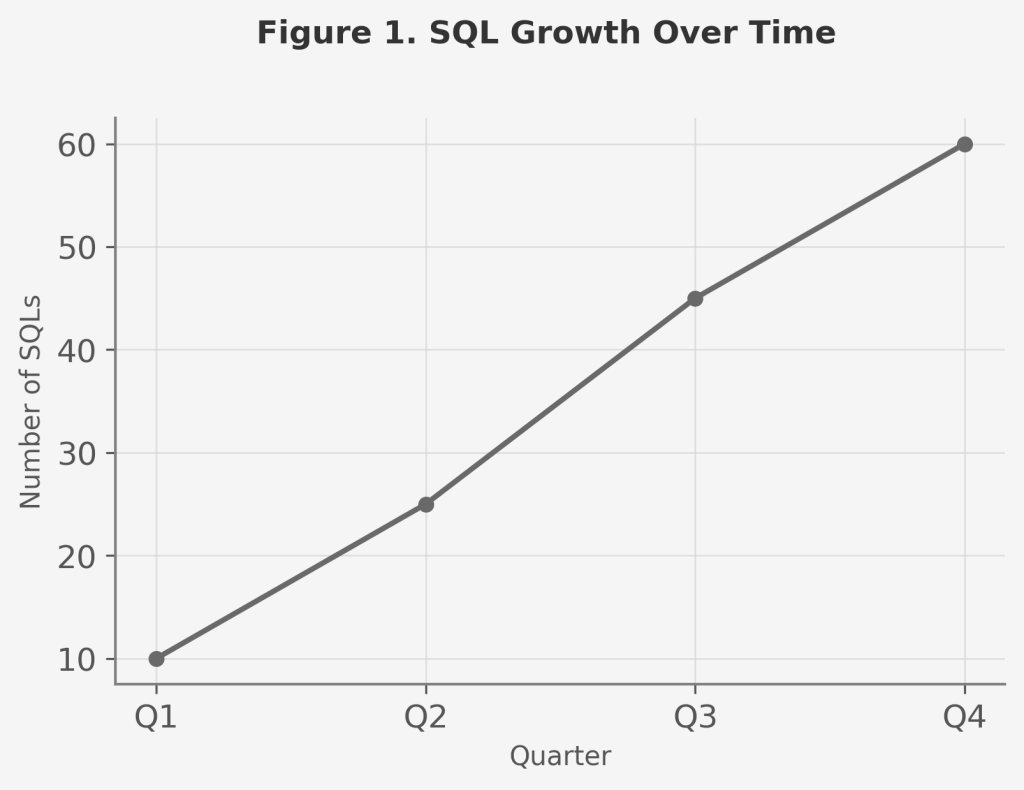
1. Highlight SQL Growth
Show how your SQL count is growing quarter-over-quarter. For example, 10 → 25 → 45 → 60 across four quarters illustrates momentum. Investors love upward trends, not just absolute numbers.
2. Project Future Revenue
SQLs can be translated into expected revenue. Say you have 50 SQLs and an average close rate of 20%. That’s about 10 expected deals. At $10k per deal, that’s $100k in potential revenue. Don’t make investors do the math – connect the dots clearly.
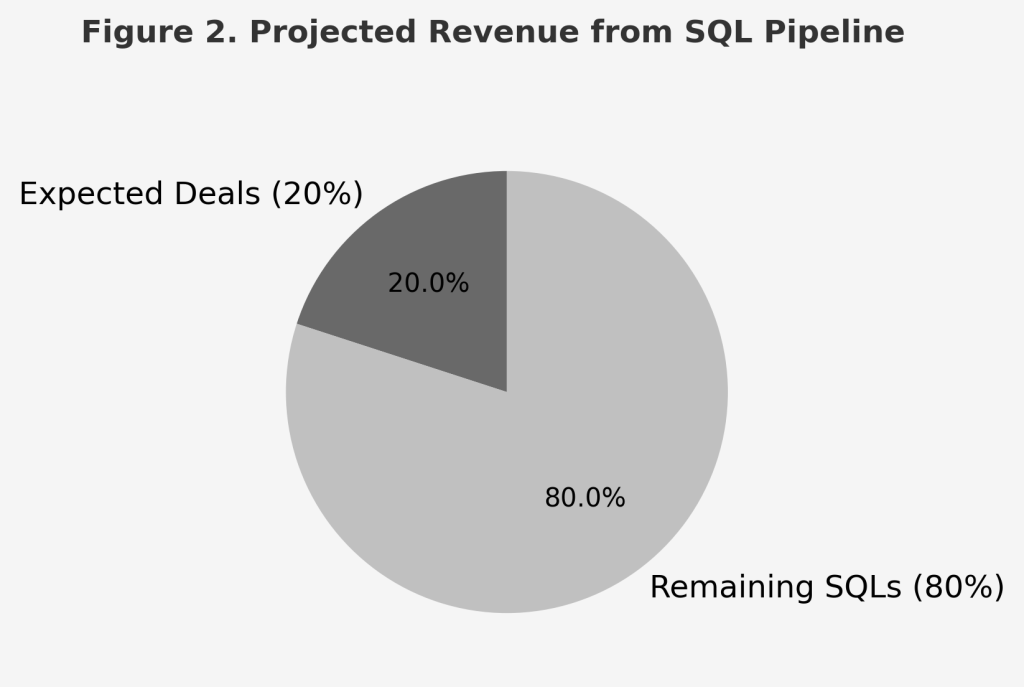
Industry benchmarks support this. In B2B SaaS, SQL-to-close rates typically range from 15–30%. Positioning your SQLs as leading indicators of revenue helps investors forecast your growth.
3. Show Conversion Efficiency
Use metrics like:
- MQL to SQL conversion
- SQL to customer conversion
For example: “Out of 200 marketing leads, 50 became SQLs (25% MQL-to-SQL), and 10 became customers (20% SQL-to-customer).”
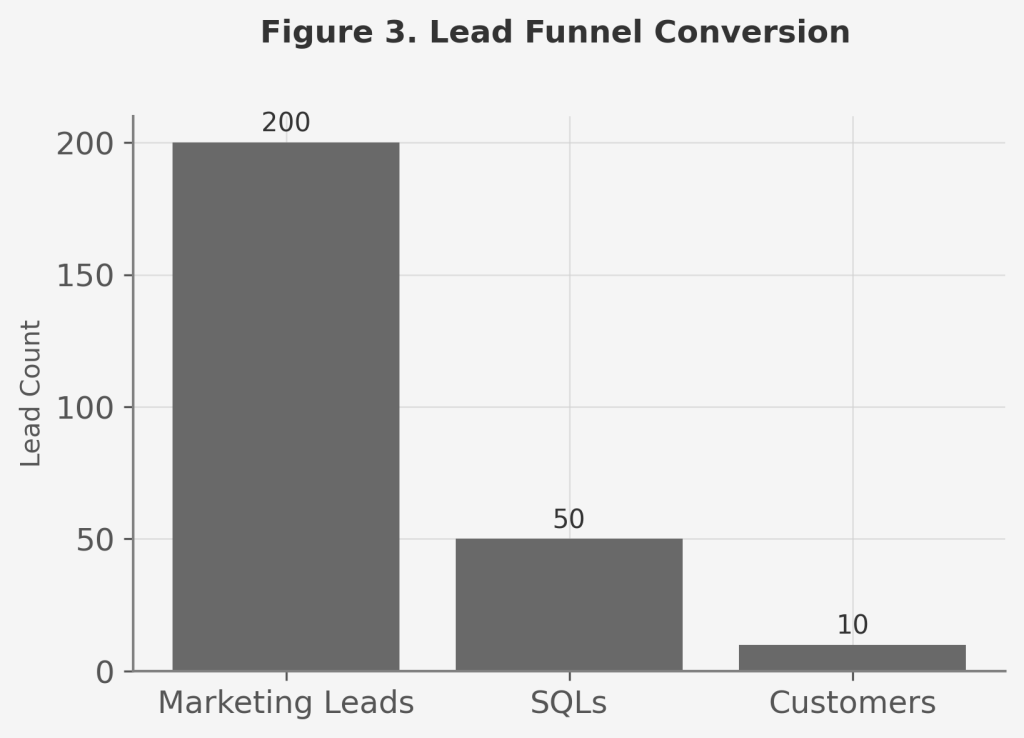
These metrics prove your funnel is not just full, but efficient. If you outperform typical B2B rates (13–26% MQL-to-SQL, 15–30% SQL-to-close), highlight that.
4. Use the 5× Pipeline Rule
If you want 10 new customers, aim for 50 SQLs (5× pipeline coverage). Investors use this rule to validate deal projections. You can say, “We aim to close 10 new customers next quarter and already have 50 SQLs – a healthy 5× pipeline.”
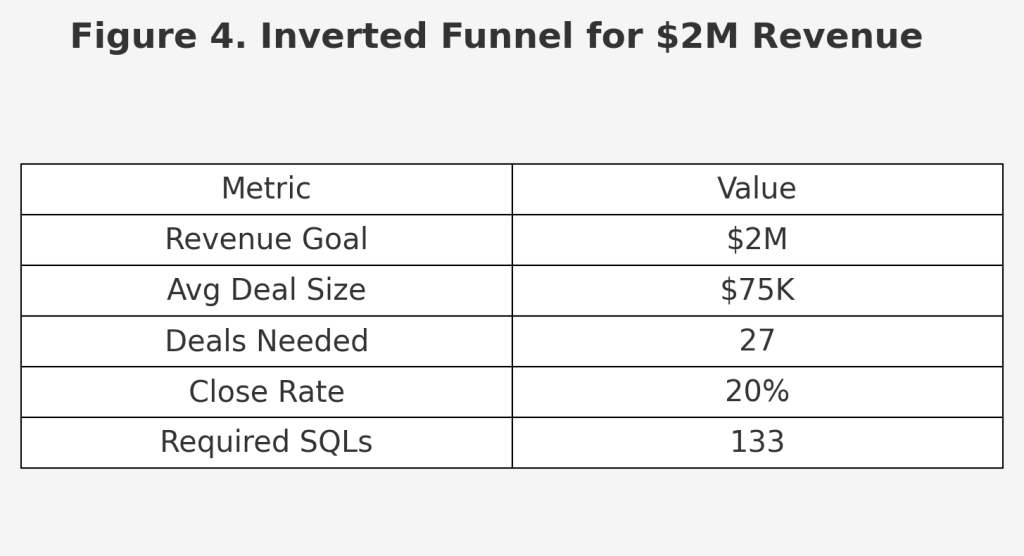
5. Present an Inverted Funnel
Start with a revenue goal and work backward. For instance, a $2M quarterly revenue goal at $75K per deal requires 27 deals. At a 20% close rate, that means you’ll need ~133 SQLs. This kind of math shows you understand how to engineer revenue, not just hope for it.
6. Prove SQL Quality
If your SQLs include enterprise clients or recognizable brands, emphasize that. 10 SQLs from top-tier clients can outweigh 50 from unknowns. Let investors visualize the quality of your pipeline.
7. Track Lead Progression
Explain how leads move from MQL to SQL to deal. If you’ve improved stages (e.g., shortened sales cycle or better targeting), mention it. This proves your team learns fast and improves with data.
How to Showcase SQLs in Your Investor Materials
Add SQLs to Your Traction Slide
In early stages, SQLs may be your best traction metric. For example: “20 paying customers and 45 SQLs in pipeline.” This paints a fuller picture than revenue alone.
Use Visuals to Communicate Funnel Strength
Visual aids like:
- SQL Growth line charts
- Funnel charts from MQL → SQL → Customer
- Pipeline conversion bar charts
These make the story clear at a glance. Pair numbers with graphics to drive impact.
Include SQLs in Your Data Room
During diligence, investors want to see the full sales pipeline: company names (if allowed), stages, expected value, and deal notes. A clean CRM export or structured pipeline doc increases confidence and clarity.
Tell a Case Study
Example: “We doubled SQLs in Q1 after improving targeting, and our revenue doubled. With investment, we’ll repeat this at scale.” This builds a compelling, cause-effect narrative for why SQLs deserve investor attention.
Why SQLs Inspire Confidence
They Prove Demand
An SQL isn’t a random signup. It’s a qualified, engaged prospect considering a purchase. That’s proof of demand, not speculation.
They Validate Your Go-to-Market Strategy
To consistently generate SQLs, your marketing and sales must be aligned. That alignment is a green flag for scaling success.
They Predict Future Revenue
SQLs are leading indicators. A full SQL pipeline now suggests strong revenue later. This helps justify higher valuation at fundraising.
They Reduce Investor Risk
Investors need proof your startup isn’t a shot in the dark. Dozens of SQLs show you’re solving a problem people want fixed. That lowers risk, making you more investable.
They Spark Investor Imagination
Mention a big-name SQL, and the investor starts picturing that customer closed. Now your deal feels more real. It builds excitement, not just trust.
Final Thoughts: Pitch With Proof
In today’s data-first environment, startups need more than big visions. They need metrics. SQLs are a powerful signal that your team is focused, your funnel works, and your product has demand.
When you walk into a pitch with strong SQL data and a clear narrative around it, you’re not just asking for investment – you’re showing why it’s a smart bet. Arm yourself with this data, connect it to revenue potential, and you’ll dramatically improve your odds of success.
Need help turning your SQLs into an investor-ready story?
 Book a Free Strategy Call with Van Natter Consulting Group – we specialize in helping startups translate traction into growth narratives and craft pitches that win funding.