


Introduction
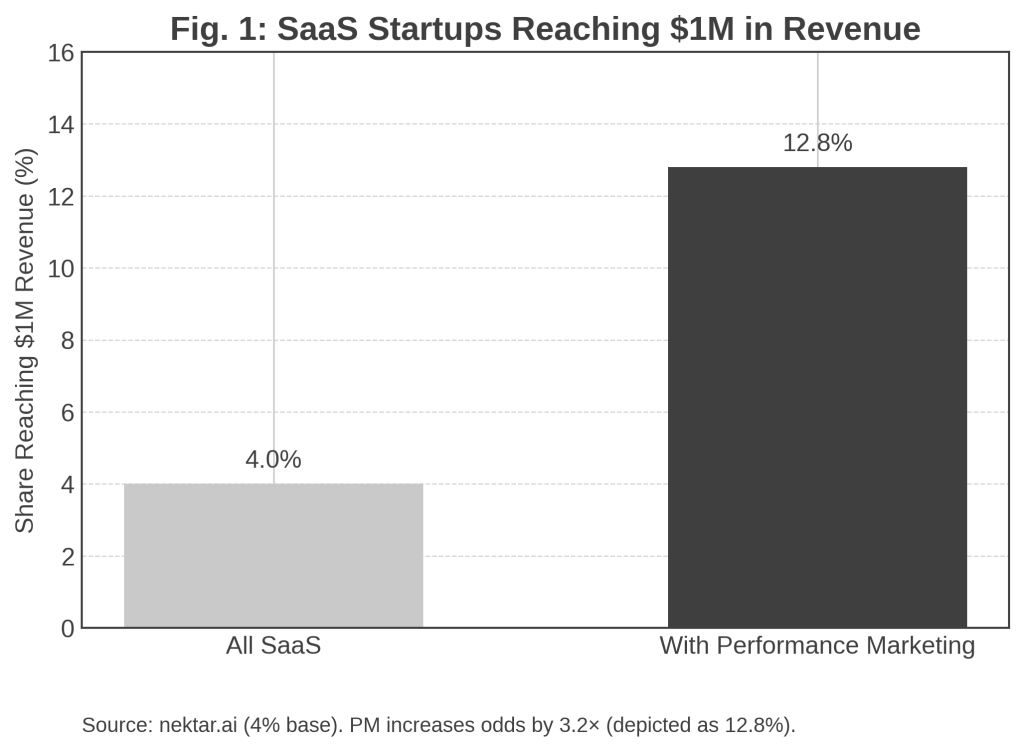
When only a tiny fraction of startups ever break the $1 million revenue mark, every growth advantage counts. In fact, only about 4% of SaaS companies reach $1M in revenue. Startups that embrace performance marketing early, however, dramatically improve their odds – one analysis suggests they are 3.2× more likely to hit $1M in revenue.
Performance marketing has emerged as the data-driven, measurable campaign strategy that can rapidly drive revenue growth for startups. This approach turns marketing into a startup growth engine by focusing on results and ROI. In this article, we’ll unpack what performance marketing is, why it’s crucial for early-stage founders across industries, and how data-driven, measurable campaigns fuel rapid startup growth. We’ll also dive into a real case study showcasing the impact of performance marketing (with some eye-opening numbers), and outline how you can get started.
What Is Performance Marketing? (A Data-Driven Definition)
Performance marketing is an approach where every marketing effort is measured by its tangible contribution to revenue and growth. Simply put, performance marketing means tracking all marketing activities “with a dollar and cents contribution to the company’s bottom line”. Unlike traditional or purely brand marketing that might focus on vague metrics like impressions or ad recall, performance marketing follows each campaign through to measurable outcomes: leads, sign-ups, purchases – any action that generates revenue. Key metrics such as CPA (Cost Per Acquisition), ROAS (Return on Ad Spend), conversion rates, and customer acquisition cost are front-and-center in decision-making. Every tactic is judged by data: How many users did it convert? How much revenue did it bring in?
This data-driven mindset contrasts with marketing that stops at “vanity metrics.” While brand awareness and engagement are valuable, performance marketing doesn’t stop at clicks or views – it tracks those interactions all the way to a sale or other revenue-generating event. For example, a content piece or video ad isn’t considered successful just because it got views; the performance marketer cares how many viewers became customers. If an initiative isn’t driving measurable results, it gets optimized or cut. This ruthlessly pragmatic approach ensures marketing spend directly fuels growth.
Early-stage startups, in particular, can’t afford fluff. As one growth agency notes, “For early-stage startups, this mindset is essential for survival.” When you have a limited runway and aggressive milestones to hit, every marketing dollar must work hard. Performance marketing provides accountability by optimizing campaigns for immediate ROI and scalable results. It’s about adopting “a mindset of optimization toward company revenue across the board,” from ad creative to conversion-optimized landing pages. In practical terms, that means startup founders focus on marketing tactics that reliably produce leads or sales (e.g., targeted Google Ads, Facebook/Instagram campaigns, conversion-focused email funnels, etc.), and they continually tweak those campaigns based on performance data.
Why Performance Marketing Is the Startup Growth Engine
Early-stage founders often hear conflicting advice: should you pour resources into brand building, or focus on performance marketing? The reality is that while brand is a long-term asset, performance marketing is the engine of immediate startup growth. Here’s why you can’t afford to ignore it:
-
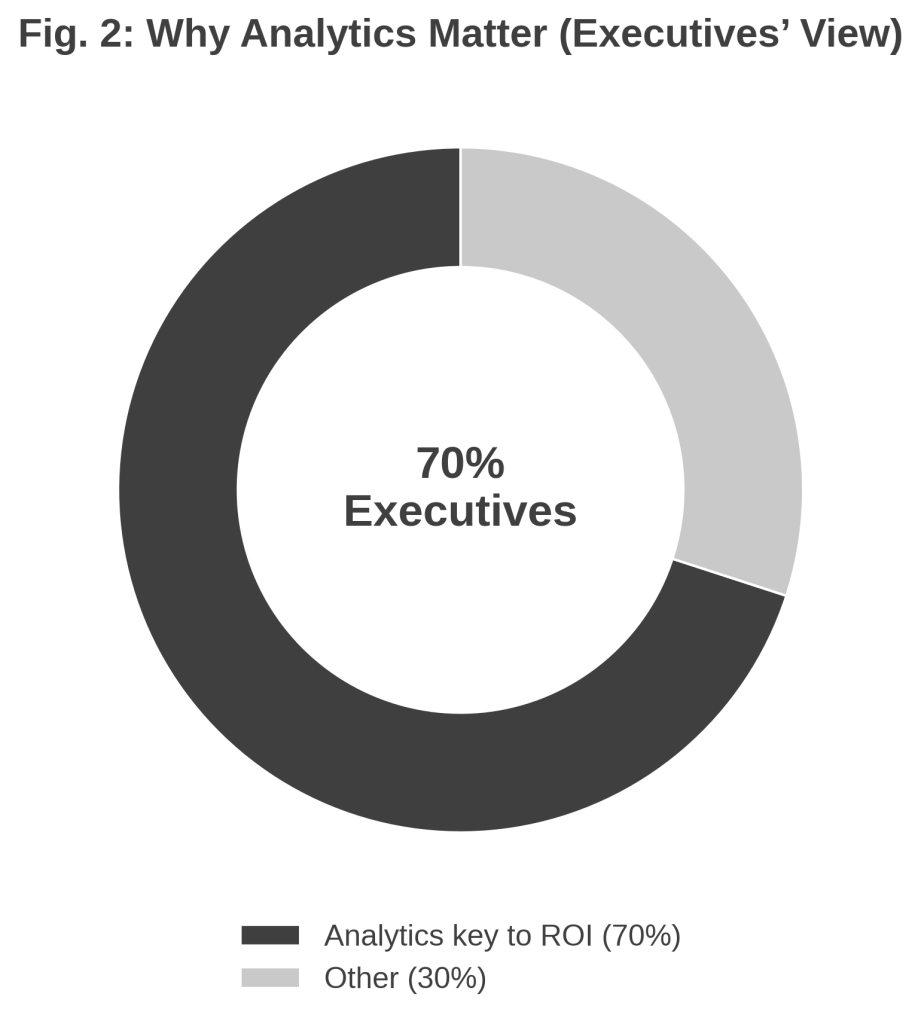
Measurable ROI and Faster Iteration: In a startup, you’re often operating with tight budgets and a need to prove traction quickly (both to survive and to impress investors). Performance marketing’s data-driven nature means you see exactly what’s working and what’s not in real time. You can allocate $1,000 to two or three different channels or campaigns, then double down on the one that brings the best customer acquisition cost (CAC) or highest conversion rate. This rapid feedback loop is pure gold for startups, allowing for fast iteration. In contrast, a broad branding campaign might leave you guessing its impact for months. It’s no wonder that 70% of industry executives say using analytics (data) is key to optimizing marketing ROI startups that leverage this are far more agile and efficient in reaching their revenue targets.
-
Direct Revenue Impact: Performance marketing is outcome-oriented. Its sole mission is to drive actions that translate to revenue. That could mean an e-commerce startup running a paid search ad campaign and tracking every ad click to a purchase, or a SaaS startup running targeted LinkedIn ads for demo sign-ups and measuring how many turn into paying subscriptions. Unlike activities where success is hard to quantify, performance marketing leaves no ambiguity: you spent X dollars, you got Y dollars back (or Z new customers). This clarity is critical for early founders. Marketing isn’t just a cost center; it becomes a predictable growth lever. As marketing advisors often say, “every effort from your marketing team has the potential to generate revenue for your startup, but not everything is optimized for that specific purpose”. Performance marketing ensures everything is optimized for revenue.
-
Rapid Revenue Growth and Proof for Investors: Investors love traction. A robust performance marketing strategy can rapidly boost your revenue curve – and you’ll have the numbers to prove it. Startups that implement systematic, data-driven marketing see significantly better outcomes. One study found an alarming 50% of early-stage startups either don’t market at all or spend on ad-hoc marketing that yields little benefit, and these companies are “missing the opportunity to enhance performance.”
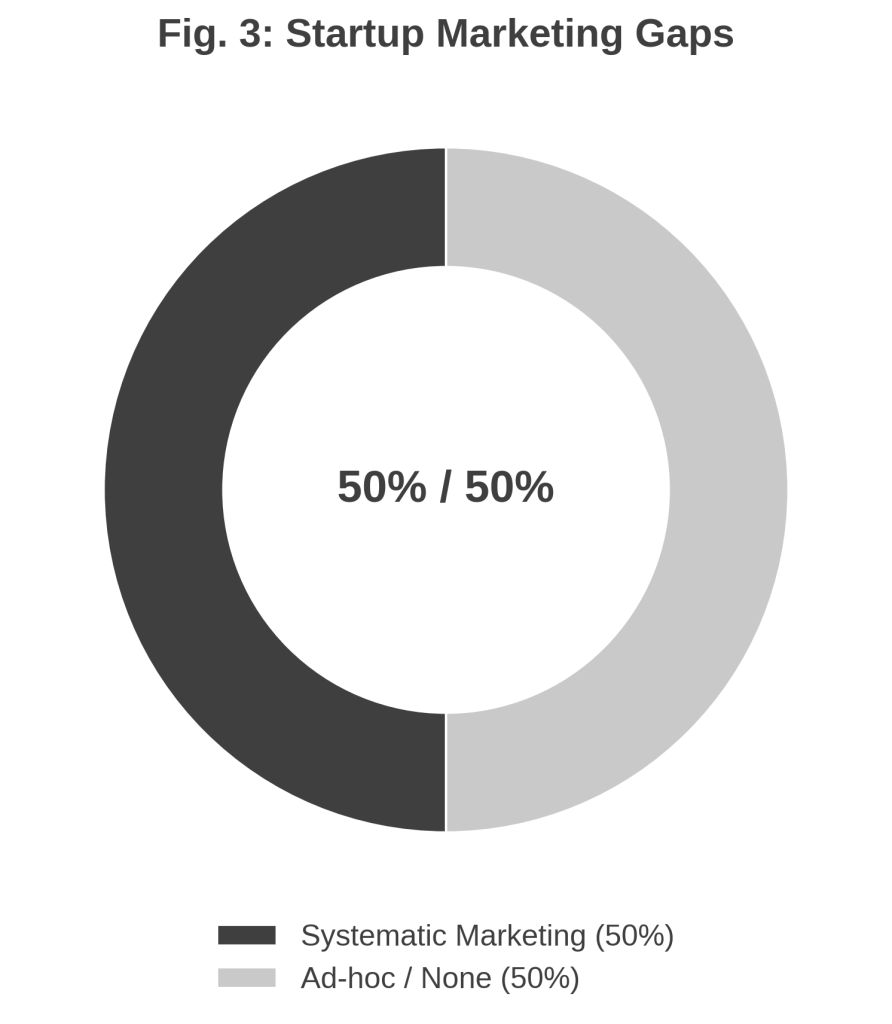
In contrast, the startups that do invest in systematic, performance-focused marketing early on reap the rewards in growth. It’s not a stretch to say that leveraging performance marketing early can be the difference between being in the 4% that reach $1M in revenue or the 96% that never get there. The bottom line: data-driven campaigns help you grow faster, and that early revenue spike not only sustains your business but also serves as compelling evidence of product-market fit when courting investors.
-
Cross-Industry Applicability: Performance marketing isn’t just for consumer apps or e-commerce. Early-stage startup founders across industries (B2C and B2B alike) can benefit. Whether you’re a fintech SaaS, a healthcare startup, or a DTC (direct-to-consumer) product brand, the principle holds: find the channels where your audience hangs out, run targeted campaigns with clear calls-to-action, and measure results relentlessly. For B2B startups, for example, systematic marketing (like targeted ads or account-based campaigns) has been shown to provide the most benefits, yet those firms are often least likely to leverage it. Don’t fall into that trap. No matter the sector, a performance-focused approach ensures your marketing budget is spent on tactics that drive real, measurable growth.
In short, performance marketing acts as a growth engine by funneling resources into what actually works. It creates a cycle of spend → measure → optimize → repeat, which is ideal for the lean startup model. Founders who get this are often able to scale revenue faster and more efficiently than those relying on intuition or vanity metrics.
Key Metrics and Strategies in Performance Marketing
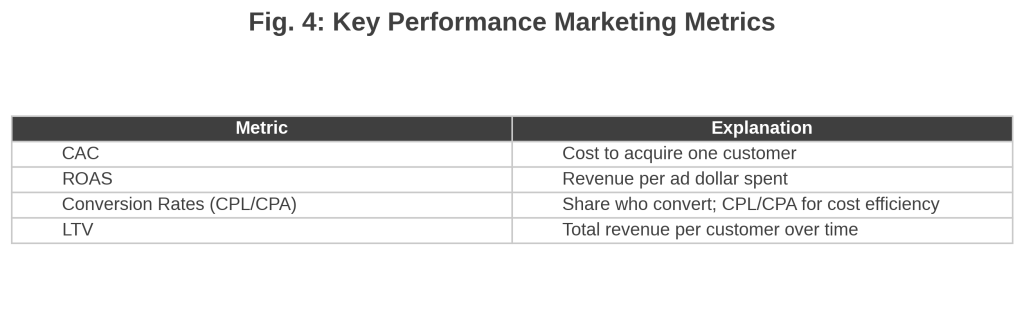
To effectively harness performance marketing, it’s important to know which metrics to track and optimize. Here are some of the key performance indicators (KPIs) and strategies that power this data-driven approach:
-
Customer Acquisition Cost (CAC): This is the cost of acquiring a single customer (total marketing spend divided by new customers acquired). Startups must keep CAC in check, ensuring it’s lower than the revenue or lifetime value from each customer. Performance marketing focuses on lowering CAC through targeted campaigns and optimization. For example, by A/B testing ad creatives or landing pages, you might drop your CAC from $50 to $30, allowing you to acquire more customers for the same budget.
-
Return on Ad Spend (ROAS) and Marketing ROI: ROAS measures how many dollars you get back for each dollar spent on ads. A ROAS greater than 1 (or 100%) means you’re generating more revenue than cost, the higher, the better. Marketing ROI similarly looks at the return on your overall marketing investment. In performance marketing, you constantly monitor ROAS on each channel. If Facebook Ads are yielding a 5x ROAS while another channel is 2x, you’d likely scale up Facebook. Measuring ROI isn’t optional – it’s the heartbeat of performance campaigns. (Notably, companies leveraging data see strong results: in one case, adopting programmatic advertising helped a brand boost its ROAS from 1.9 to 9.2, a 381% improvement!)
-
Conversion Rates and CPL/CPA: Conversion rate is the percentage of users who take a desired action (buy, sign up, etc.) out of the total who saw an ad or visited a page. Even small upticks in conversion rate can translate to big revenue gains. Performance marketers test everything: ad copy, images, call-to-action buttons, form lengths – to lift conversion rates. They also keep an eye on Cost Per Lead (CPL) or Cost Per Acquisition (CPA), ensuring that each conversion is achieved at a sustainable cost. For instance, if one landing page converts 10% of visitors and another 5%, the 10% page can halve your CPA, effectively doubling the efficiency of your spend. Continuous CRO (Conversion Rate Optimization) is a core tactic in performance marketing.
-
Lifetime Value (LTV) and Retention: While performance marketing often focuses on acquisition, savvy startups also track customer lifetime value – the total revenue a customer brings over their relationship. If you acquire high-LTV customers, you can justify higher upfront spend. Data-driven marketing efforts extend to retention campaigns (like email marketing, retargeting, loyalty programs) that increase LTV. Performance marketers will measure how campaigns not only acquire customers but also how those customers behave over time (repeat purchases, upgrades, etc.), ensuring the growth is sustainable revenue, not one-off.
-
Multichannel Attribution: A challenge in digital marketing is that a customer might interact with multiple campaigns (e.g., see a Facebook ad, then later click a Google search ad) before converting. Performance marketing uses attribution models to give credit to each touchpoint appropriately. By leveraging tools like multi-touch attribution, you avoid misallocating budget to just “last click” and instead understand the true journey. This way, you can invest in a balanced channel mix – for example, using search ads for high-intent leads, social ads for broader reach, and content/SEO for nurturing – while still measuring how each contributes to the final sale. The key is having a strong measurement framework; as Tuff Growth notes, “measurement is the backbone of performance marketing” and the engine for optimization.
Strategies: To get tactical, performance marketing often involves channels like Google Ads (search and display PPC), Facebook/Instagram Ads, LinkedIn Ads (for B2B), affiliate marketing, and sometimes highly targeted content/SEO or email campaigns – anything that can be tracked to a result. The strategy always starts with clear goals: e.g., “Acquire 1,000 users at <$20 CAC in 3 months” or “Drive $100K in new subscription revenue this quarter.” From there, campaigns are launched, data flows in, and optimizations are made continuously (pausing poor performers, scaling winners, adjusting targeting, etc.). It’s a scientific approach to growth: hypothesize, experiment, measure, and iterate.
Performance Marketing in Action: A Case Study
To really appreciate the power of performance marketing, let’s look at it in action with a startup example. Consider Hestan Culinary, a young e-commerce brand in the cookware space (backed by Michelin chefs, but essentially a startup in need of growth). They decided to expand into programmatic digital ads as a performance marketing strategy, aiming for more conversions and revenue growth. The results were astonishing:
Hestan Culinary saw explosive growth by adopting a data-driven performance marketing campaign, including a +381% ROAS and +281% conversions in a short span.
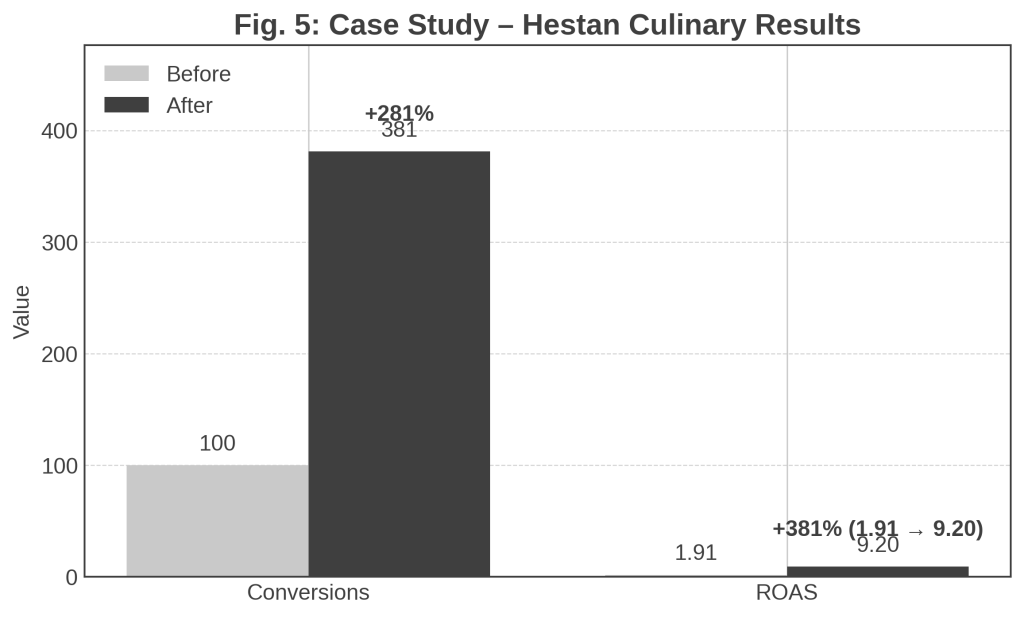
In this case, Hestan used a full-funnel performance marketing approach leveraging targeted programmatic ads via StackAdapt (a digital ad platform) to reach a qualified audience, and then nurturing those prospects down the funnel. By closely monitoring the data, they were able to quickly optimize the campaign. Within the first month, they achieved a 218% increase in conversions and lifted their ROAS from 1.91 to 9.20. Over a slightly longer period, conversion volume was up 281%, and return on ad spend soared by 381% (meaning for every $1 spent, they got nearly $4.81 back in revenue). This translated to a significant revenue boost for the startup, all attributable to performance marketing efforts.
What’s important in this story is how measurable tactics led to rapid improvements. The team at Hestan didn’t just throw money at ads blindly – they expanded to a new channel, set specific performance goals, and then continuously refined the campaign (targeting qualified audiences immediately, testing different ad creatives and placements). The numbers tell the story: more conversions at a fraction of the previous cost, and a highly positive ROI. This kind of outcome is what makes performance marketing so compelling for startups. It’s not theory or long-term brand lift; it’s concrete gains you can see in your dashboard and bank account within weeks.
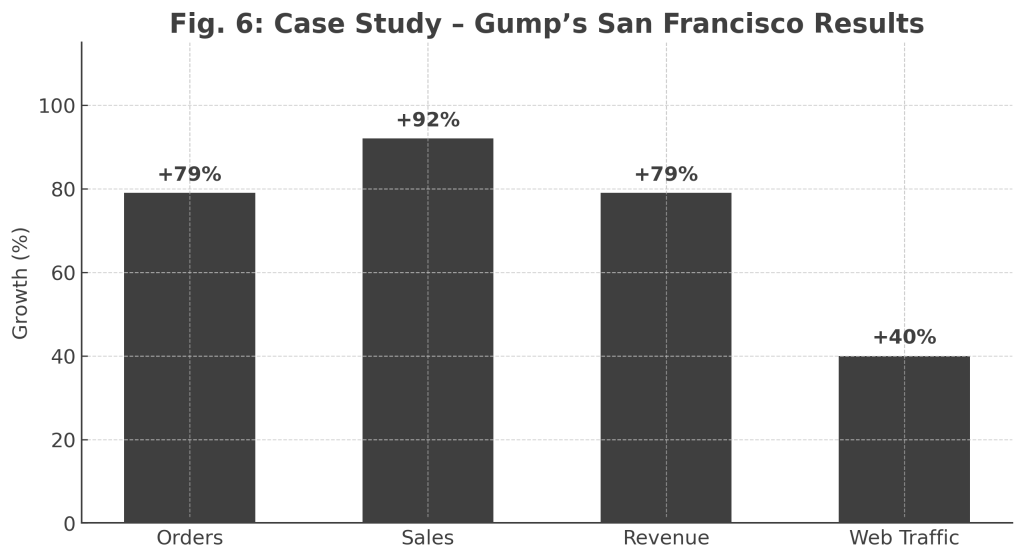
Another example: a retail startup (Gump’s San Francisco) used performance marketing tactics (Google Search ads, Shopping campaigns, and cross-selling strategies) to surpass their revenue goals. Year-over-year sales jumped 92% growth solely attributed to marketing, leading to a 79% increase in overall revenue. They also saw web traffic climb 40%, orders up 79%, and effectively doubled their ROI on ad spend in a key category. These figures illustrate a broader point: data-driven marketing can directly fuel revenue growth at an unprecedented rate. When you focus on performance, marketing isn’t a gamble; it’s a growth investment with clear returns.
Getting Started: How to Build Your Startup’s Growth Engine
Focusing solely on performance marketing might sound complex, but early-stage founders can start simple and scale up. Here’s a basic roadmap to ignite your own performance marketing growth engine:
-
Set Clear, Data-Driven Goals: Define what “performance” means for your startup. Is it 1,000 new sign-ups in 6 months? $50K in monthly recurring revenue? A 5% conversion rate on your landing page? Set specific targets for your campaigns that tie to revenue or core growth metrics. This gives you a north star and a way to judge success or failure objectively.
-
Choose Your Key Channels & Metrics: Identify where you’re likely to reach your target audience and start with a couple of channels. For many, this means launching a Google Ads campaign (to capture active searchers for your solution) and a Facebook/Instagram campaign (to generate demand via social). It could also include LinkedIn for B2B, or an affiliate/referral program for consumer apps. Establish the primary metric for each channel (e.g. CPA for paid ads, CTR for initial tests, etc.) and set up analytics to track everything (Google Analytics, conversion pixels, etc.). Remember, “you can’t call it performance marketing if there’s no strong measurement framework in place,” so get the tracking right from day one.
-
Launch Small Experiments & Measure Closely: Start with modest budgets and treat each campaign as an experiment. Try two different ad messages, or two audiences, and compare results. Which ad copy yields a better click-through? Which targeting brings lower CPA? Look at the data daily or weekly. Don’t be afraid of poor initial results – they are insights. A campaign that’s underperforming tells you something: maybe the channel isn’t right, or the offer needs tweaking. By running a few micro-campaigns, you can quickly gather data-driven insights without breaking the bank.
-
Optimize Ruthlessly: Performance marketing is all about continuous optimization. As data comes in, double down on winners and cut losers. If a certain keyword or demographic is converting well at a low cost, allocate more budget to it. If another isn’t converting, pause it. Refine your landing pages (simplify forms, strengthen calls-to-action) if conversion rates are lagging. Over time, these incremental tweaks compound into major improvements. For instance, if A/B testing your landing page increases conversion from 5% to 7%, that’s 40% more customers with the same ad spend – a game-changer for your growth rate.
-
Scale What Works (and Iterate Again): Once you find a performance marketing formula that works, whether it’s a particular Facebook ad set that yields great ROI or a content-driven funnel that converts, pour fuel on it. Increase the budget gradually to scale up results. But continue to monitor – performance can change as you scale or as the market shifts, so keep testing new variations. Also, begin exploring additional channels once you have one steady engine running. The beauty of performance marketing is that it creates a virtuous cycle: success in one channel gives you revenue to reinvest in exploring another, all while maintaining positive ROI.
Throughout this process, maintain a data-driven culture in your startup’s marketing. Encourage your team to ask: “What do the numbers say?” before making decisions. Make use of dashboards or reports that clearly show your KPIs. By ingraining performance thinking, even non-marketing decisions (like product changes or pricing) can benefit from the test-and-measure approach.
Conclusion: Ignite Your Startup’s Growth (Don’t Get Left Behind)
In today’s hyper-competitive landscape, performance marketing is the startup growth engine you simply can’t ignore. It embodies a mindset of accountability and agility – one where every marketing action is tied to outcomes, and every dollar spent is expected to earn its keep in revenue. Startups that deploy data-driven, measurable campaigns early not only drive revenue faster, but also build a foundation of insights and optimization that keeps paying off as they scale. On the flip side, ignoring performance marketing means leaving growth on the table and potentially falling behind competitors who are more data-savvy.
The evidence is clear: from case studies of startups doubling their revenue thanks to performance-focused campaigns, to statistics showing that systematic marketing can make or break early-stage success, there’s never been a stronger case to invest in this approach. It’s measurable, scalable, and rapid, exactly what an early-stage company needs to survive and thrive.
Ready to turbocharge your startup’s growth?  Book a Free Strategy Call with Van Natter Consulting Group . Don’t let your business be part of the 50% that overlook this crucial strategy. By embracing performance marketing, you’re effectively stacking the odds in your favor – driving more revenue, impressing investors with real numbers, and setting your startup on a data-driven path to success.