


For most startups, early traction comes from early adopters. These customers are flexible, curious, and willing to tolerate imperfect products in exchange for solving a painful problem. Founders sell directly, deals close quickly, and feedback loops are tight.
Then Series A happens.
Suddenly, expectations change. Investors want larger deal sizes, predictable growth, and a clearer path to scale. Founders begin asking new questions:
-
How do we refine our Ideal Customer Profile (ICP)?
-
Should we move upmarket?
-
How do we sell to larger, more mature buyers without slowing growth?
At its core, ICP expansion is about moving from early adopters to the early majority, from product believers to operational buyers.
But this transition is where many companies make expensive mistakes.
The problem isn’t ICP expansion itself. The problem is how it’s done.
Why ICP Expansion Is So Risky
Data shows that expanding your ICP without structure often slows growth instead of accelerating it:
-
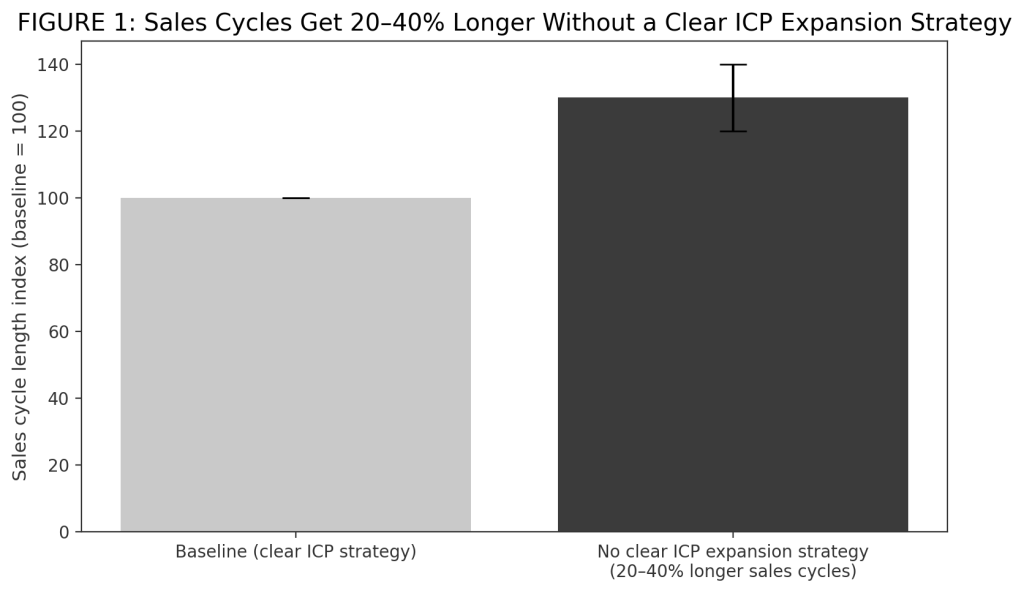
Companies that expand ICP without a clear strategy see 20–40% longer sales cycles
-
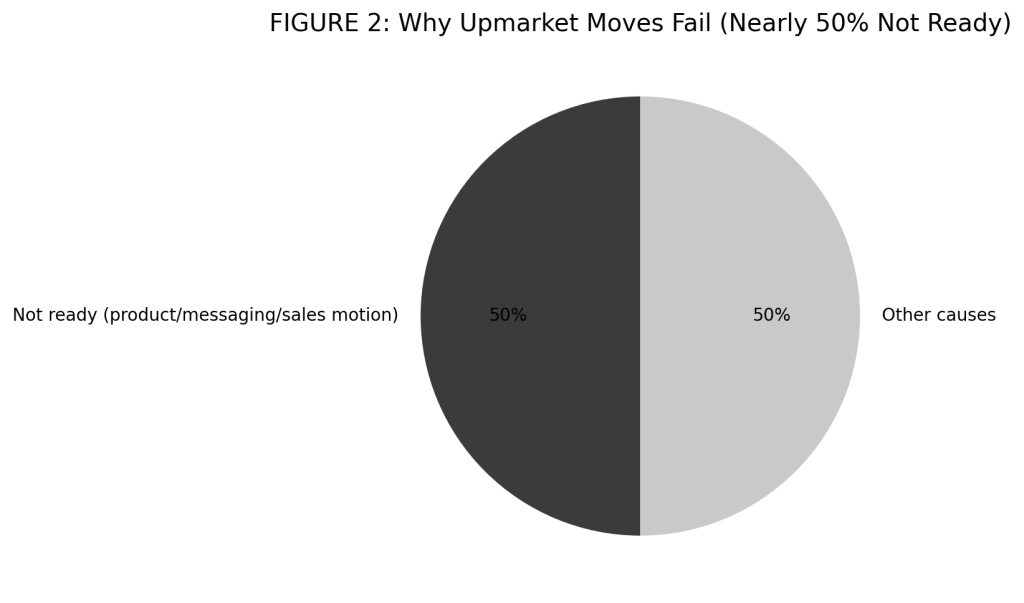
Nearly 50% of failed upmarket motions fail because the product, messaging, or sales motion isn’t ready
-
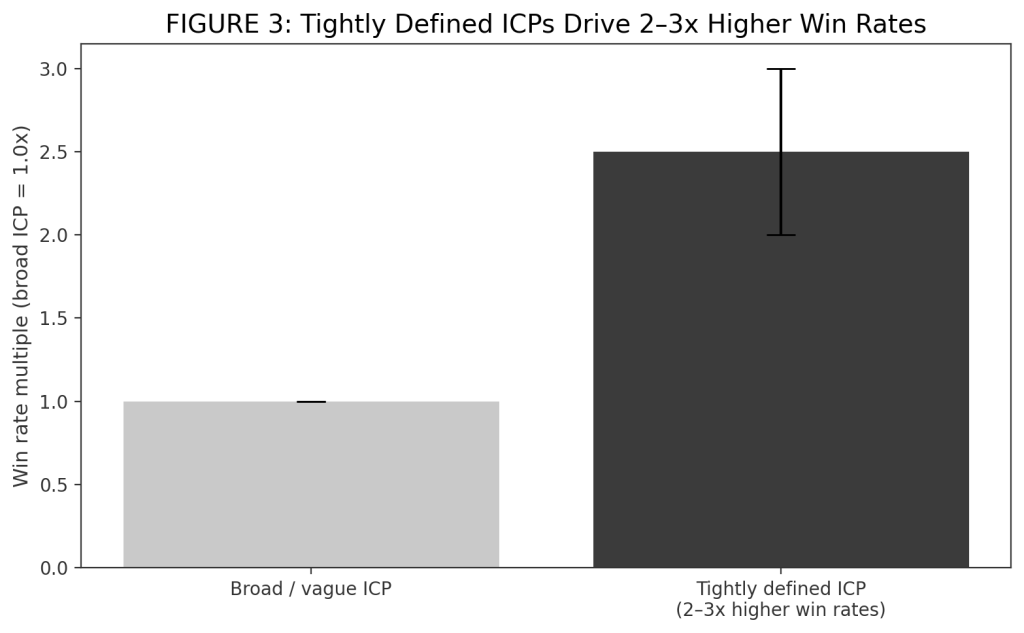
B2B companies with a tightly defined ICP achieve 2–3x higher win rates than those targeting broad or vague segments
The takeaway is simple:
The mistake isn’t expanding; it’s expanding the wrong way.
Below are the five most common ICP expansion mistakes Series A companies make and why they hurt growth.
Mistake #1: “Let’s Just Go Upmarket” Without Changing Anything Else
The most common mistake founders make is assuming that selling to larger companies automatically means larger contracts.
The thinking goes like this:
“Our product works. Enterprises have bigger budgets. Let’s just target bigger logos.”
What happens instead:
-
Sales cycles double or triple
-
Decision-makers multiply
-
Security, legal, and procurement slow deals
-
Deals stall late in the pipeline
Data shows that moving upmarket increases deal complexity by 2–3x, even when the product stays the same.
Early adopters buy because they feel pain acutely and are willing to experiment.
Early-majority buyers buy because the solution fits their existing operational workflows.
When companies go upmarket without adapting:
-
The product lacks enterprise-grade expectations
-
Messaging still speaks to founders, not operators
-
Sales teams aren’t trained for multi-stakeholder deals
The result is predictable: longer cycles, lower close rates, and founder escalation.
Mistake #2: Expanding ICP Before the Product Is Ready
Another fatal error is expanding the ICP before the product has stabilized for the new buyer profile.
Early adopters forgive:
-
Rough edges
-
Manual workflows
-
Limited integrations
-
Feature gaps
The early majority does not.
Research shows that nearly half of failed ICP expansions happen because the product wasn’t enterprise-ready, not because demand didn’t exist.
Common warning signs include:
-
Increased churn from larger customers
-
Heavy post-sale customization
-
Engineering pulled into sales calls
-
Support tickets are increasing by 30–50%
Instead of scaling revenue, teams accidentally scale complexity and support cost.
ICP expansion must follow product maturity, not precede it.
Mistake #3: Broadening the ICP Instead of Segmenting It
Many founders respond to growth pressure by broadening their target market:
“Let’s sell to more industries.”
“Let’s serve everyone who could use this.”
This feels like expansion, but it’s actually dilution.
Data shows:
-
Broad ICPs generate lower win rates
-
Sales teams struggle with inconsistent messaging
-
Marketing campaigns underperform due to unclear positioning
Companies with a vague ICP see up to 50% lower conversion rates compared to those with a narrow, well-defined target.
The issue isn’t that the market is too small.
The issue is that the buyer context becomes unclear.
ICP expansion should add clarity, not remove it.
Mistake #4: Treating ICP Expansion as a Sales Problem
Many Series A founders believe ICP expansion is solved by hiring better salespeople.
In reality, it’s rarely a sales-only issue.
When ICP expansion fails, symptoms often include:
-
Sales blaming the product
-
Product blaming sales
-
Marketing blamed for “bad leads”
-
Founders pulled back into deals
This happens because the entire go-to-market system is misaligned.
Selling to early adopters relies on:
-
Founder storytelling
-
Rapid iteration
-
High-touch engagement
Selling to the early majority requires:
-
Clear positioning
-
Repeatable qualification
-
Predictable buyer journeys
Treating ICP expansion as a hiring problem ignores the fact that the sales motion itself must change.
Mistake #5: Letting Revenue Pressure Drive ICP Decisions
Perhaps the most dangerous mistake is expanding the ICP out of urgency rather than strategy.
Common triggers include:
-
Pressure from investors to increase ACV
-
Missed growth targets
-
Pipeline gaps
-
Competitors moving upmarket
When expansion is reactive:
-
Teams chase deals outside the ICP
-
Qualification standards drop
-
Custom work increases
-
Forecast accuracy declines by 20–25%
Short-term revenue wins come at the cost of:
-
Longer sales cycles
-
Higher churn
-
Lower lifetime value
-
Founder dependency returning
ICP expansion driven by panic often creates fragile growth that looks good for a quarter but collapses later.
The Hidden Cost of Getting ICP Expansion Wrong
When these mistakes compound, companies experience:
-
Sales cycles extending by 30–40%
-
Win rates dropping below sustainable levels
-
Customer success stretched thin
-
Founders re-entering deals to close revenue
Most critically, leadership loses confidence in forecasting.
Instead of scaling predictably, growth becomes erratic, and investor trust erodes.
Final Thought
ICP expansion is one of the most powerful growth levers for a Series A company, but only when done deliberately.
Most failures don’t come from choosing the wrong market.
They come from expanding before the company is ready to support that market.
If ICP expansion feels harder than it should, the problem isn’t demand.
It’s structure.
By: Allen Van Natter, CEO & Founder, Van Natter Consulting Group
