


Introduction: Expansion Is Earned, Not Declared
For most startups, early growth feels deceptively smooth.
Early adopters discover the product.
Founders sell directly.
Deals close quickly.
Feedback is fast and forgiving.
Then Series A happens.
Suddenly, expectations change. Investors want predictable revenue, larger deal sizes, and a clear path to scale. Founders start asking new questions:
-
How do we refine our Ideal Customer Profile (ICP)?
-
Should we move upmarket?
-
How do we sell to more mature buyers without slowing growth?
This is where many companies go wrong.
Successful ICP expansion isn’t about ambition.
It’s about readiness.
The companies that scale from early adopters to the early majority don’t chase bigger buyers. They earn the right to sell to them by evolving their product, messaging, and sales motion together.
This article outlines a practical, step-by-step ICP expansion framework used by high-performing B2B Series A companies to scale revenue without breaking growth.
Why ICP Expansion Fails for So Many Series A Companies
Before looking at what to do right, it’s important to understand why ICP expansion is risky in the first place.
Data across B2B SaaS companies shows clear patterns:
-
Companies that expand their ICP without a clear strategy experience 20–40% longer sales cycles
-
Nearly 50% of failed upmarket motions fail because the product, messaging, or sales motion wasn’t ready
-
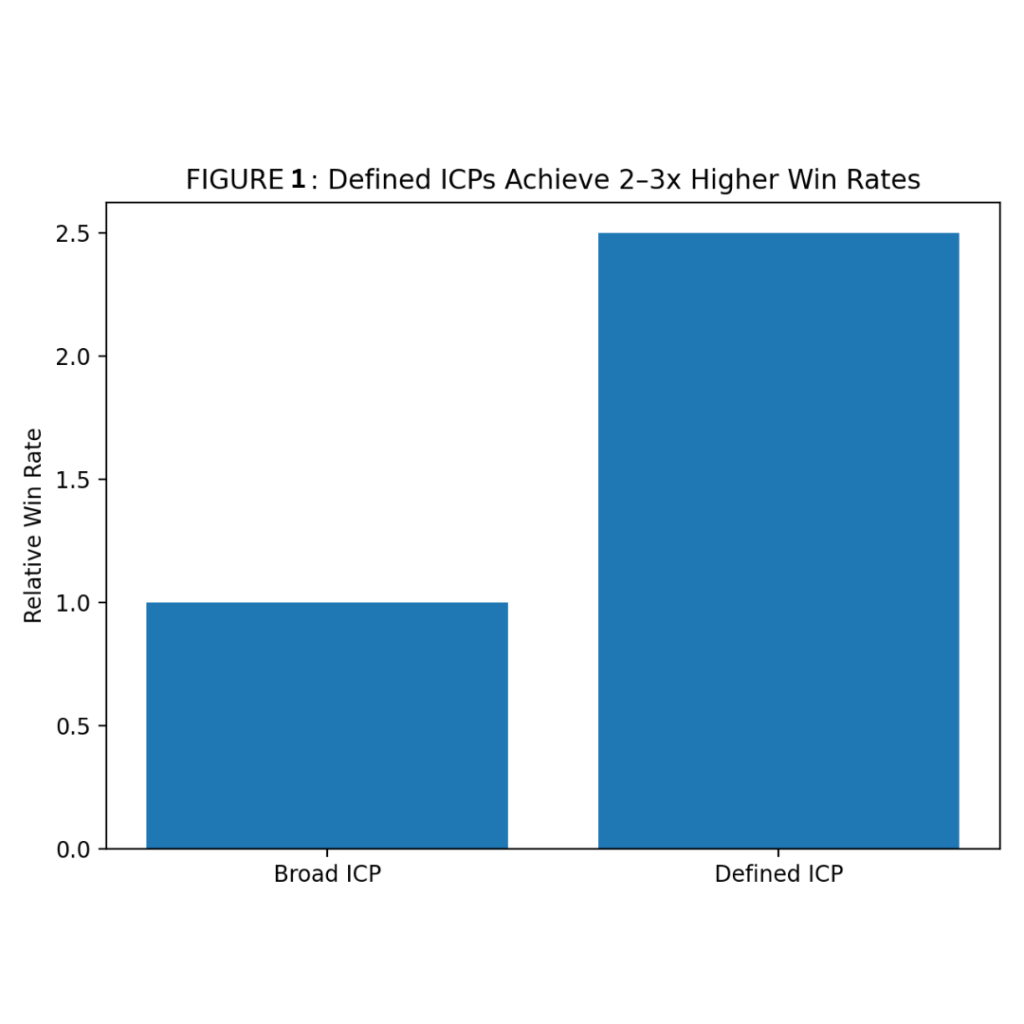
B2B companies with a tightly defined ICP achieve 2–3x higher win rates than those targeting broad or vague segments
The takeaway is simple:
The problem isn’t ICP expansion itself.
The problem is how it’s done.
Step 1: Lock Down Your Core ICP First
Before expanding, founders must be brutally honest about who already buys successfully.
Many teams rush to expand because revenue pressure mounts, but they haven’t actually understood why their best customers buy in the first place.
What to Do
Start by analyzing your top 20–30 closed-won customers. Look for patterns across:
-
Company size
-
Industry
-
Buyer role
-
Primary use case
-
Sales cycle length
-
Time-to-value
Then separate customers into three groups:
-
Best customers – high retention, fast onboarding, repeatable value
-
Average customers – close, but with friction
-
Loud customers – vocal but unprofitable or complex
This distinction matters more than most founders realize.
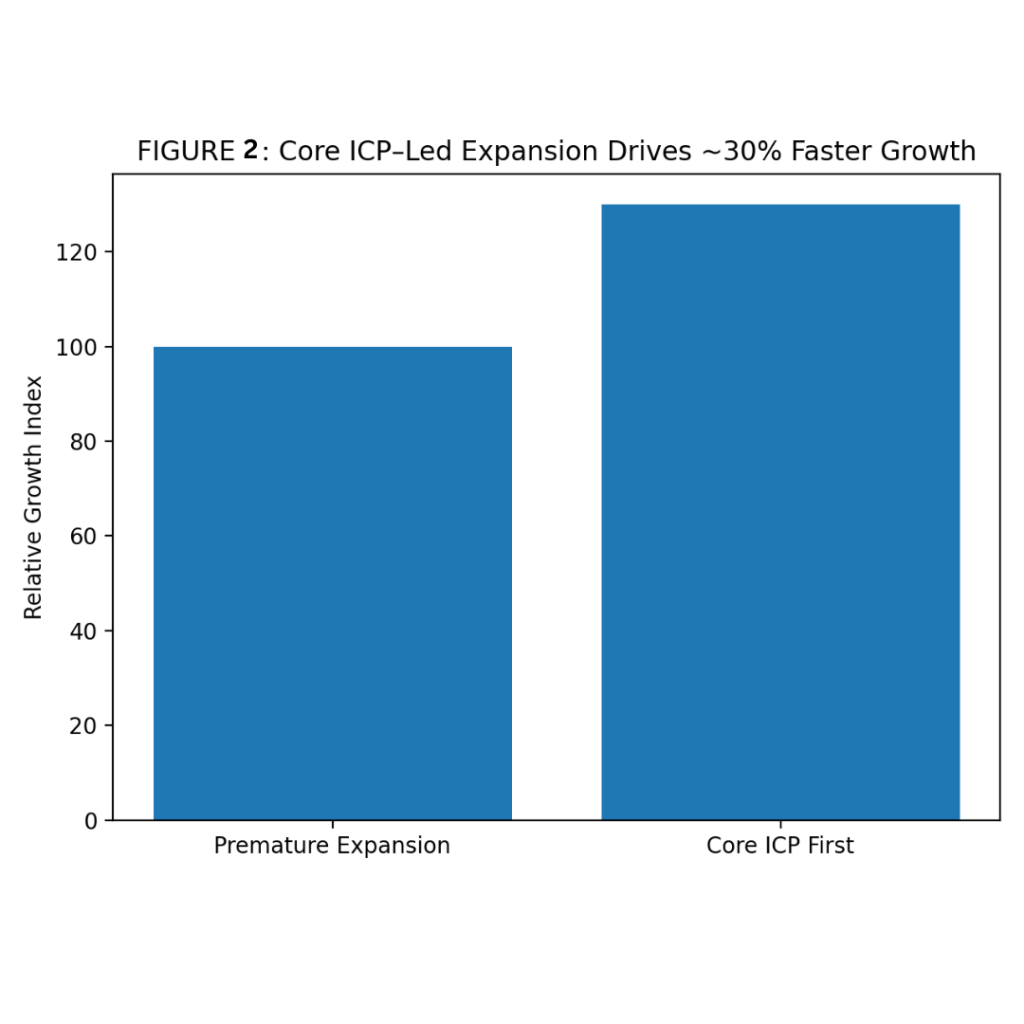
Research shows that companies expanding from a clearly defined core ICP grow ~30% faster than those that expand prematurely or inconsistently.
Outcome
A stable foundation to expand from, not abandon.
Step 2: Expand via ICP Adjacencies (Not New Markets)
The safest ICP expansions are not radical shifts. They are one variable away from your core ICP.
Most failed expansions happen because companies jump too far, too fast.
Examples of ICP Adjacencies
-
Same buyer, larger company size
-
Same problem, more regulated industry
-
Same use case, higher risk or compliance environment
Each adjacency introduces incremental complexity, not systemic shock.
What to Do
Identify 2–3 adjacent ICPs and evaluate them against:
-
Deal size potential
-
Buying complexity
-
Product readiness
-
Sales cycle expectations
Ranking these variables forces discipline.
Instead of “selling to everyone,” teams run focused experiments with clear hypotheses.
Outcome
Focused expansion replaces scattered selling.
Step 3: Validate Willingness to Pay Before Scaling
Upmarket buyers don’t just have bigger budgets.
They have stricter expectations.
Many Series A teams assume pricing will scale naturally with company size. That assumption is dangerous.
What to Do
Before committing to an expanded ICP:
-
Interview real buyers in the target segment
-
Validate:
-
Budget ownership
-
Buying committee size
-
Security, legal, and compliance requirements
-
-
Pilot pricing with a small number of deals
Data from enterprise sales teams shows that pricing and value misalignment is one of the top causes of stalled late-stage deals.
Teams that validate pricing early avoid over-customization, discounting, and late-stage deal collapse.
Outcome
Higher ACV based on evidence, not assumptions.
Step 4: Redefine the ICP at the Buyer Level
Firmographics alone are not enough for ICP expansion.
As deals become larger, buying decisions become distributed.
What to Do
For each expanded ICP, explicitly define:
-
Economic buyer
-
Champion
-
Influencers
-
Blockers
Then document:
-
Success metrics for each role
-
Risk tolerance
-
Internal incentives and fears
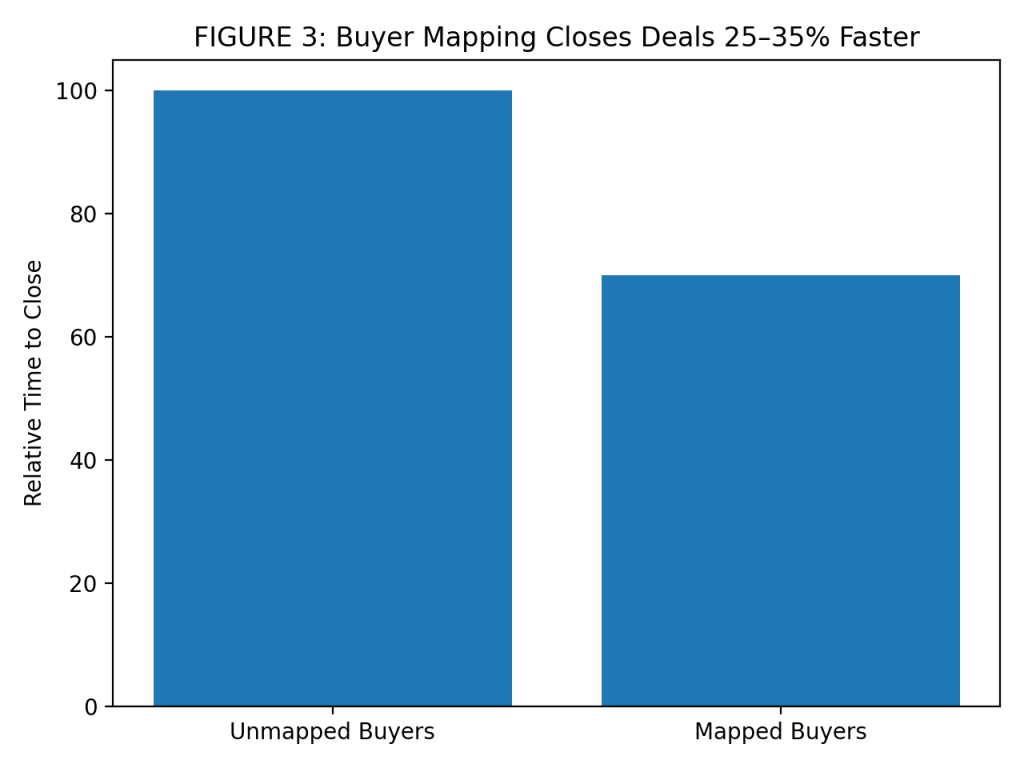
Research across B2B sales organizations shows that deals with a clearly mapped buying committee close 25–35% faster than those without.
This is not about adding bureaucracy.
It’s about reducing uncertainty.
Outcome
Sales teams navigate decisions instead of guessing.
Step 5: Shift Messaging from Upside to Risk Reduction
Early adopters buy vision.
The early majority buys certainty.
One of the biggest mistakes companies make during ICP expansion is keeping the same messaging while changing the buyer.
What to Do
Shift your messaging from:
-
Innovation → Reliability
-
Speed → Process fit
-
Features → Outcomes
Replace excitement-based claims with proof:
-
Case studies
-
ROI metrics
-
References from similar environments
Data shows that risk-oriented messaging significantly improves engagement with operational buyers and procurement teams.
Outcome
Trust replaces excitement as the conversion driver.
Step 6: Adapt the Sales Motion to Buyer Reality
ICP expansion is not just a marketing or positioning change.
It’s an execution change.
Selling to early adopters relies on:
-
Founder storytelling
-
Rapid iteration
-
High-touch engagement
Selling to the early majority requires:
-
Multi-threading
-
Structured deal reviews
-
Mutual close plans
What to Do
Introduce:
-
Stakeholder mapping
-
Objection escalation frameworks
-
Procurement and legal navigation training
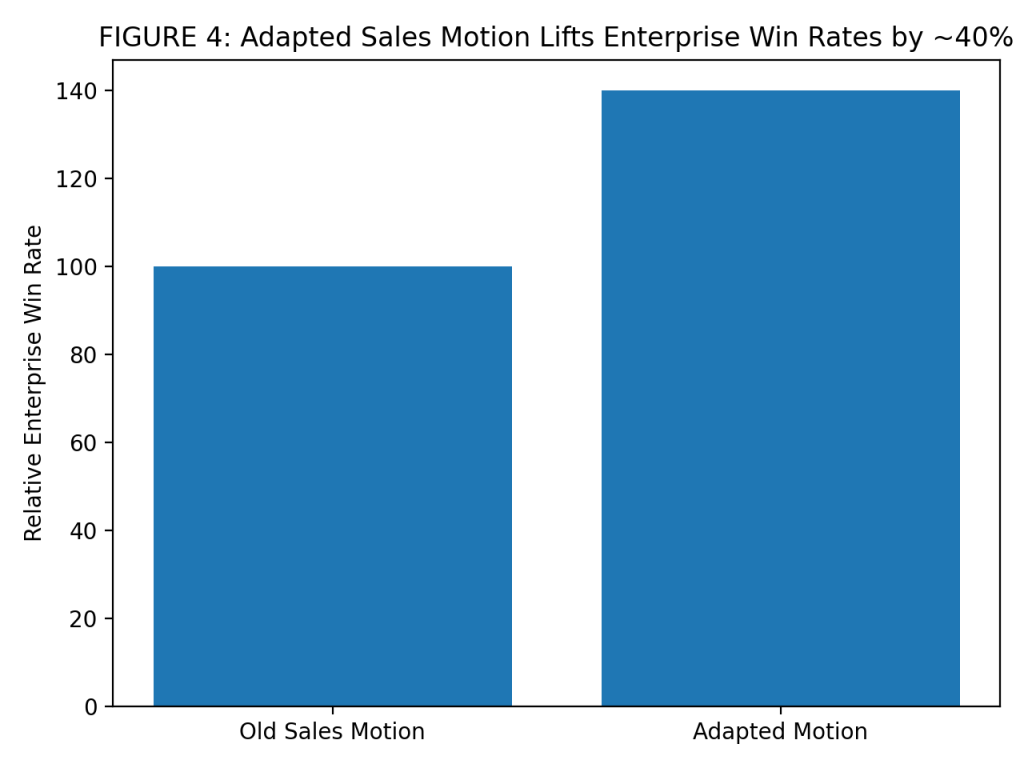
Teams that adapt their sales motion to match buyer reality see up to 40% higher enterprise win rates compared to teams that simply “hire more salespeople.”
Outcome
Sales execution aligns with buyer expectations.
Step 7: Expand in Phases, Not All at Once
The biggest mistake founders make is flipping the switch overnight.
True ICP expansion is iterative.
What to Do
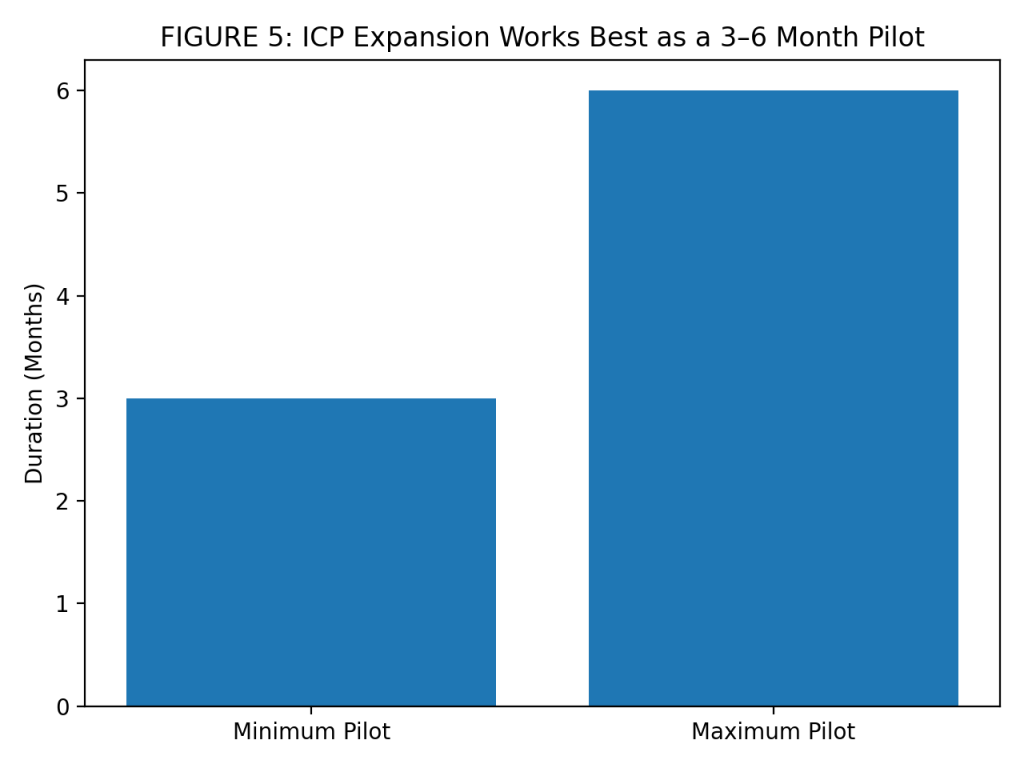
Run expansion as a 3–6 month pilot:
-
Keep it founder-led or assign dedicated reps
-
Track:
-
Win rate
-
Sales cycle length
-
Deal quality
-
-
Decide deliberately to:
-
Double down
-
Refine
-
Pause
-
This approach protects the core business while creating learning loops.
Outcome
Learning replaces guesswork.
The Result: Scalable Growth Without Losing Momentum
When ICP expansion is done right:
-
ACV increases sustainably
-
Sales velocity holds
-
Marketing sharpens
-
Forecast accuracy improves
-
Investor confidence grows
Most importantly, growth becomes intentional, not reactive.
Instead of chasing revenue, companies build systems that support it.
Final Thought
ICP expansion isn’t about chasing bigger logos.
It’s about evolving how you sell, who you sell to, and why they buy.
Series A is the moment where focus either compounds or fractures.
Expand deliberately.
Validate continuously.
Adjust the motion, not just the target.
That’s how companies move from early adopters to the early majority without breaking what already works.
By: Allen Van Natter, CEO & Founder, Van Natter Consulting Group
 Book a Free Strategy Call with Van Natter Consulting Group