


For most startups, founder-led sales is not a choice; it’s a necessity. Early customers buy in because the founder understands the problem deeply, communicates the value with conviction, and adapts the pitch in real time. Deals close not due to a polished process, but often because of the founder’s instinct and personal credibility. This approach works in the early days, but the challenge comes when the company needs to scale its sales team.
At that moment, founders don’t just need more sellers; they need to transfer what lives in their heads into something a sales team can execute consistently. In other words, the founder’s intuitive sales playbook must become an explicit process others can follow. This is why founders searching for sales playbooks, recorded demos, and sales handover frameworks are really searching for one thing: how to codify intuition into a repeatable sales process that drives revenue growth.
Why This Transition Fails So Often
Transitioning from founder-led selling to a scalable sales team fails frequently, and data highlights why the risk is real. Consider these points:
- Lack of a formal process hurts growth:
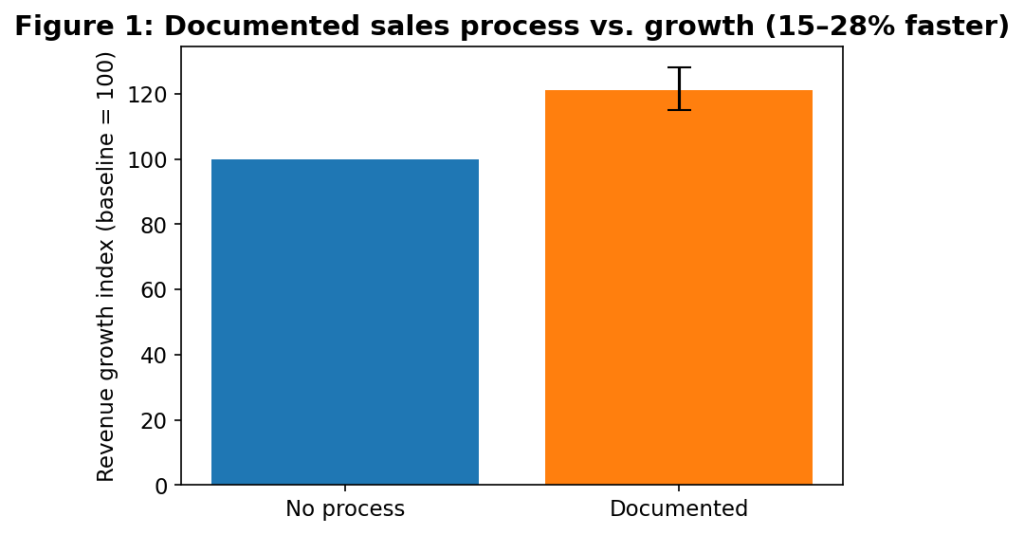
Companies with a documented or formal sales process grow revenue 15-28% faster than those without one. In other words, a repeatable sales process correlates with significantly higher revenue.
- Founders get pulled back in:
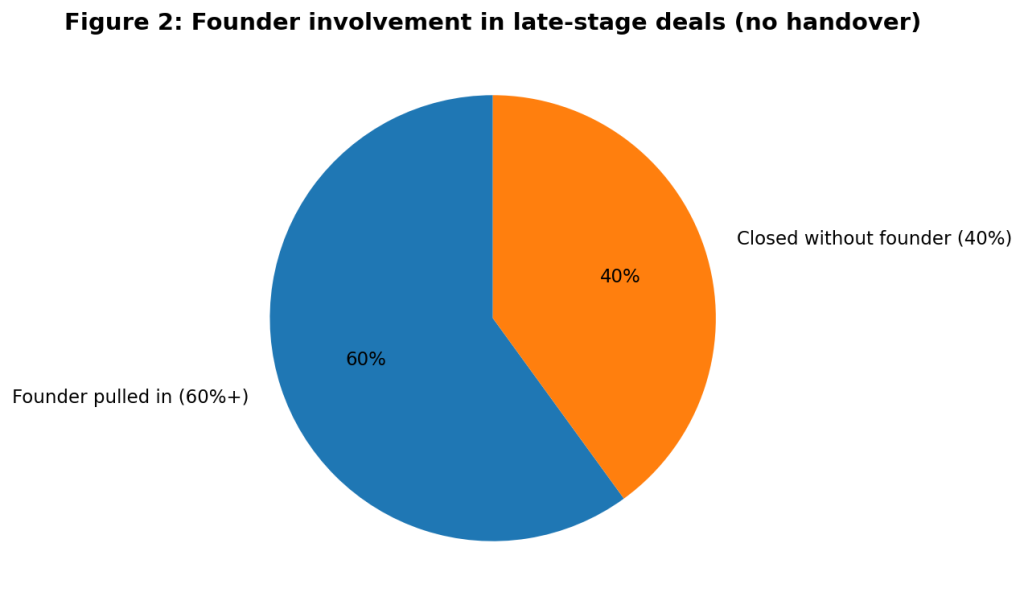
In early-stage B2B companies without a defined sales handover process, founders are dragged back into over 60% of late-stage deals to rescue them. This means the founder remains a bottleneck for closing big deals, defeating the purpose of hiring a team.
- Inadequate training slows new reps:
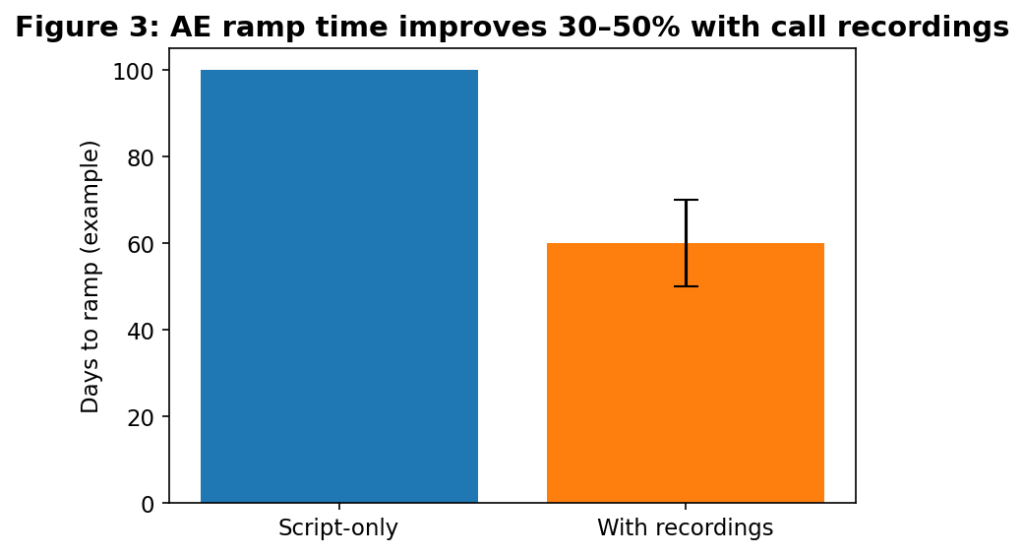
New Account Executives (AEs) ramp up 30-50% faster when trained using real call recordings and deal examples, compared to relying on abstract scripts alone. Without capturing real sales interactions for training, new hires take longer to become effective.
The standard failure mode in this transition isn’t simply hiring the wrong people; it’s hiring before the sales motion is transferable. Many teams bring on sales reps too soon, without a scalable system in place. Put another way, hiring sales reps without codifying the founder’s winning approach is like handing them a map with half the landmarks missing. It’s no surprise that results stall and deals slip when the process isn’t clear.
In fact, startup experts recommend that founders should not step back until sales are somewhat repeatable, for example, after personally conducting at least 50 sales demos and achieving a ~20% win rate. Only then do you have enough data to guide others.
The Wrong Way: Hiring Before Codifying
Most struggling teams follow a familiar but flawed path when attempting to scale sales:
Founder closes early deals. Initial revenue shows promise.
Company hastily hires Account Executives. These new AEs are given a pitch deck, a CRM login, and only loose guidance.
AEs start pitching without a playbook. Without the founder’s intuition, messaging becomes inconsistent.
Results stall; deals slip. Each rep handles objections differently, and the sales cycle stretches out.
The founder jumps back in to “save” deals. The founder has to re-engage to close deals that the team can’t, restarting a vicious cycle.
This creates a dangerous loop where revenue growth depends on the founder’s availability rather than on systems. The founder ends up babysitting deals instead of focusing on strategic growth. Sales hires get frustrated because they never truly “own” the deals, and the company doesn’t actually reduce the founder’s load.
Why does this happen? Often, founders underestimate how much of their sales success is due to pattern recognition and learned instinct. They assume a great salesperson can “figure it out” in a new environment. In reality, even the best sales hires can’t read the founder’s mind; they need a sales operating system to plug into. Skipping the work of codifying a sales process is like expecting a new engineer to write flawless code without any architecture or documentation. It’s bound to fail.
The Core Insight: Sales Is Pattern Recognition
What founders often underestimate is that what they do in sales is repeatable, even if it feels intuitive and unique. Great founders subconsciously develop pattern recognition in their sales approach. They consistently:
Recognize which prospects are real buyers versus tire-kickers.
Frame customer problems in a way that creates urgency to act.
Anticipate objections before they’re even voiced.
Know when to push forward, when to pause, and when to disqualify a prospect.
These are patterns, not one-off talents. The core insight for scaling sales is that the goal of the transition is not to turn new reps into charismatic founders; it’s to turn the founder’s successful patterns into a clear operating system that others can follow. Once you document and teach these patterns, your sales team can start replicating the founder’s success in their own style. This turns sales from an art only the founder can perform into a scalable process that any well-trained rep can execute.
The Right Way: A Step-by-Step Sales Handover Process
Below is a complete, gap-free framework founders can follow to transition from a founder-led sales approach to a scalable team the right way. Think of it as a step-by-step sales handover process that codifies what works and prepares your team to succeed.
Step 1: Audit Founder-Led Sales (Before Hiring)
Before documenting anything or making new hires, founders need clarity on what is actually working in their current sales motion. This means taking a thorough, honest look at the founder-led sales process in practice.
Actions:
Conduct a sales audit of recent deals. For the last 10-20 closed-won deals, identify the key elements of each sale:
How did the lead enter the pipeline (source of lead or referral)?
What problem statements or product messaging resonated most with the customer?
Where did each deal accelerate or stall in the pipeline? (e.g. quick closure after demo vs. long radio silence)
Which deals felt “easy” (a clear need and quick close) versus which felt forced or dragged out?
Document these patterns and inflection points. Often, this audit reveals surprising insights, for example, you might find that deals in one industry segment closed much faster, or that certain pain points consistently drove urgency.
Outcome:
A clear picture of your real sales motion, not just what you assume it is. By the end of this audit, you should be able to summarize how and why your early customers bought from you. This reality check ensures that you base your scalable process on facts and repeatable events, not rosy assumptions.
Step 2: Record Reality, Not Scripts
Most sales playbooks fail because they document theory (what the founder thinks should be done) instead of actual behaviors (what the founder actually does on calls). To effectively hand over sales, record the real thing.
Actions:
Start building a “living library” of real sales interactions. Record the founder (or other top performers) in key sales conversations, such as:
Discovery calls where you uncover customer needs.
Product demos where you showcase the solution.
Objection-handling moments (e.g., pricing pushback, competitor mentions).
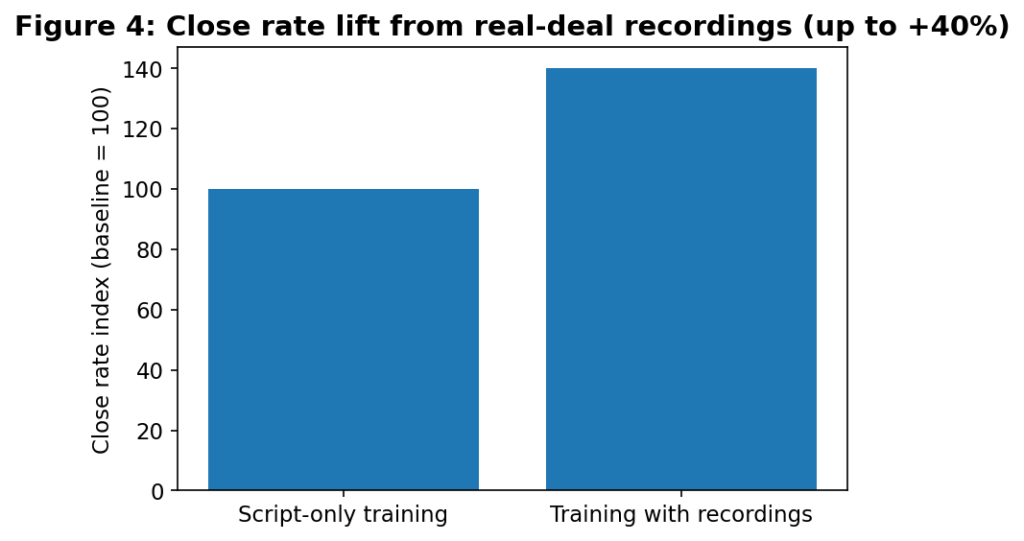
Organize and tag these recordings by criteria like industry of the prospect, deal size, and type of objection or scenario. Modern sales enablement tools or even simple call recording software can help collect these. Data shows that reps trained on real-deal recordings outperform those given only scripts by a large margin. In fact, teams that use actual call recordings for training see significantly higher close rates (often up to 40% better) than script-only training.
Outcome:
A living library of “how deals actually close” at your company. This becomes invaluable training material for new sales hires. Instead of reading about how to sell your product, they can hear and see how the founder navigates conversations in the real world. It grounds your sales playbook in reality, making it far more effective.
Step 3: Define Qualification Criteria Like a Founder
Founders often disqualify bad leads instinctively; they’ve talked to enough customers to sense who is a fit and who isn’t. New reps don’t have that intuition, so you need to define it for them to prevent wastage of time on dead-end prospects.
Actions:
Clearly define what a qualified prospect looks like (and what it doesn’t). In plain language (avoid vague sales jargon), write down criteria such as:
Ideal customer profile (ICP): What types of companies or buyers are not a good fit? (e.g., too small, wrong industry, lacking budget, etc.)
BANT/CHAMP factors: What budget, authority, need/problem, and timeline make a deal viable? Outline minimum criteria in each area (for example, “Has a VP-level project owner and at least $$ budget earmarked within this quarter”).
Red flags to disqualify early: List signals that should kill a deal early. This could be a lack of a real problem to solve, prospect only “shopping around,” unrealistic feature requests, or cultural mismatches.
Ensure this qualification checklist is easy to follow. Train your team that saying “no” to a bad prospect is as valuable as saying “yes” to a good one; it frees them up to focus on real opportunities.
Outcome:
Reps stop chasing bad deals, and sales cycles shorten. By qualifying leads as the founder would, your team will spend time only on prospects who are likely to close. This means fewer resources wasted on long shots, and a higher win rate on the deals that do enter the pipeline.
Step 4: Break the Sales Process into Stages with Exit Criteria
A founder’s sales “flow” is often fluid and adapts on the fly. To scale, that flow must be broken down into a set of clear, executable sales stages that anyone can follow and track. Each stage should have specific exit criteria to prevent gut-feel forecasting.
Actions:
Map the sales journey into distinct stages and define each one. For example, your stages might be:
First Contact/Qualification – Initial conversation or lead qualification.
Discovery – Deep dive into the prospect’s needs and problems.
Demo/Presentation – Showing the product and aligning on the solution.
Validation – Proof of concept, trial, or stakeholder buy-in phase (could include proposal).
Close – Negotiation and closing the deal (ink on paper).
For each stage, document:
The goal of that stage (e.g., in Discovery, the goal might be to uncover the prospect’s top 3 pain points and budget range).
Required inputs to start the stage (e.g,. “Discovery stage begins after prospect confirms a scheduling of a 1-hour meeting with all key stakeholders”).
Exit criteria to move to the next stage (e.g. “Discovery is done when we have identified a champion, confirmed budget, and scheduled a demo”).
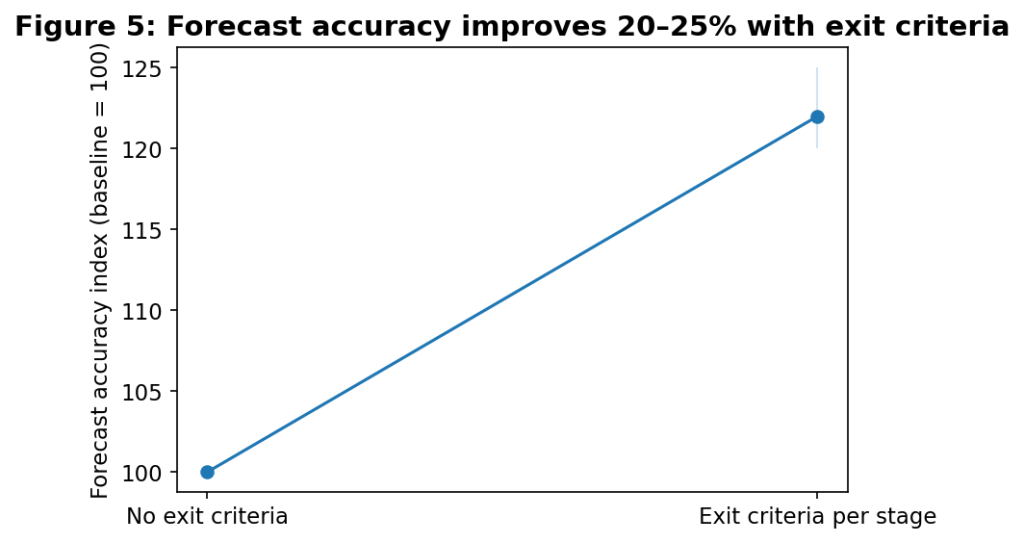
By defining exit criteria for each step, you create accountability and predictability. In fact, companies that define clear exit criteria at each stage achieve 20-25% higher forecast accuracy on their sales pipeline. This means your sales forecasts to management or investors become much more credible.
Outcome:
A predictable pipeline with visible movement instead of murky “almost there” deals. Both your team and your investors will appreciate that your sales projections are based on concrete progress, not gut feel. It also allows you to spot bottlenecks (e.g., many deals stuck in Validation) and coach the team on how to push deals forward.
Step 5: Translate Top Objections into Battlecards or Playbooks
Founders don’t fear objections; they expect them and handle them expertly after hearing them dozens of times. To scale, capture this knowledge so your sales reps can handle objections with confidence rather than escalating everything back to you.
Actions:
List out the top 5-10 objections you consistently hear in real deals. For each objection, document a mini playbook:
Why the objection comes up: Understanding the prospect’s concern (e.g., “X competitor has feature Y that you don’t” or “price is too high compared to doing nothing”).
How the founder responds: Write down the actual response or reframing the founder uses that has proven effective. What stories, analogies, or data does the founder use to address it?
What not to say: Sometimes knowing how not to answer is just as important. If there are responses that backfire or sound defensive, note them so reps avoid those.
Real example: Pair each objection with a real recorded call or scenario (from Step 2’s library) where the objection was handled well. For instance, “Prospect worried about X -listen to how our founder navigated this at 12:30 in the call recording linked here.”
This becomes an Objection Handling Playbook or set of battlecards that reps can quickly reference. Role-play these objections in training sessions so that reps practice responding in a safe setting.
Outcome:
Reps gain confidence in handling tough questions and stop immediately looping in the founder at the first sign of resistance. Your sales team will project more credibility, and prospects will trust them more because they get solid answers without always waiting for “I’ll get back to you.” This also frees up the founder from being on call for every tricky conversation.
Step 6: Train for Pattern Recognition, Not Personality
When building a sales team, many founders think they need to hire “natural closers” with rockstar charisma. In truth, what you need are pattern recognizers – reps who can learn and execute the successful patterns you’ve identified. Training should reflect that.
Actions:
Shift your training and hiring focus toward process and patterns:
Train reps on common patterns: Use the recordings, stages, and playbooks to show what a successful sales cycle looks like. For each stage, illustrate what good outcomes and red flags look like. For example, train them to recognize buying signals (like when a prospect keeps asking about implementation details – a sign of serious interest), or to notice when a deal is going cold (prospect stops responding promptly).
Shadow and review: Have new reps shadow the founder or a seasoned salesperson on live calls, then debrief on what patterns they noticed. Quiz them on why the founder asked certain questions or steered the conversation a certain way.
Test with real scenarios: Instead of abstract Q&A tests, give reps scenarios or recorded calls and ask them to analyze (“Was this prospect qualified? What pattern do you see here? What would you do next?”). This ensures they can apply the playbook, not just recite it.
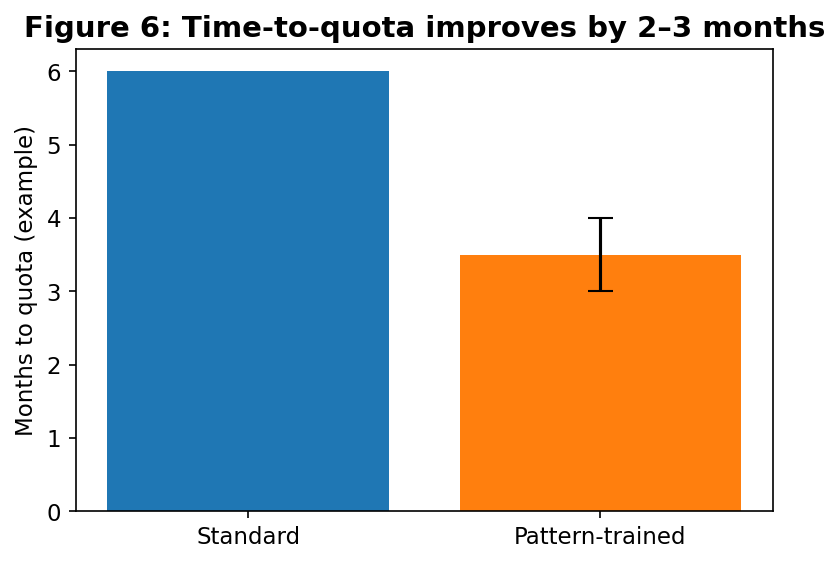
Hiring for “personality” or assuming a star salesperson from another company will automatically shine in your context is risky. Data shows that reps trained to recognize and respond to repeatable patterns reach productivity (hit quota) 2-3 months faster on average than those left to figure it out on their own. By emphasizing process over personality, you create consistent performance even from average reps.
Outcome:
A sales team that operates systematically and doesn’t rely on superhero charm. Even if individual styles differ, the outcomes become more consistent. Your average performers will start closing in a range much closer to your top performers, because everyone is following the same proven playbook.
Step 7: Hire (Only After the System Is Ready)
Only after building the above system should serious hiring begin. At this point, you’ve transformed the founder’s intuition into an operating system for sales. Now you can confidently onboard new salespeople into that system.
Actions:
Proceed with hiring AEs or a sales leader after you have your playbook and training content in place. When hiring, look for candidates who can learn quickly and follow a process. You’re not just seeking lone-wolf closers; you want team players who will embrace the system and execute it consistently. Key steps at this stage:
Onboard methodically: Use your recorded calls, stage definitions, qualification criteria, and objection handling library as official onboarding material. Have new hires review and shadow these resources intensively in their first weeks. Essentially, they should “apprentice” under the founder’s recorded experience before taking on leads of their own.
Set clear expectations: Make it clear from day one that the sales process is defined and that following it is a must. Tie adherence to the process with performance metrics (for instance, tracking if reps are moving deals through the stages properly, or if they’re qualifying correctly).
Mentorship: If possible, have the founder or a seasoned team member mentor new hires through their first few deals to ensure the process is being followed and to fine-tune any nuances that weren’t captured in documentation.
By waiting to hire until the system exists, you greatly increase the odds that your first sales hires will succeed. You’re effectively handing them a franchise kit for selling your product, rather than a blank slate.
Outcome:
Faster ramp-up, lower risk, and far less founder intervention. New AEs will come up to speed in record time because they have a clear guide. You’ll avoid the costly trial-and-error of hiring salespeople who underperform due to a lack of guidance. And crucially, the founder can step back and watch the sales machine run, intervening only by exception.
The Final Result: Founder Independence and Predictable Revenue
When a founder executes this handover process correctly, the benefits to the business are transformational:
Revenue no longer depends on the founder’s calendar. Deals keep closing even when the founder is on vacation or focusing on other aspects of the business. The sales engine runs independently.
Sales performance becomes measurable and coachable. With a clear process and data from each stage, you can measure what’s working and where reps struggle. Coaching becomes specific (e.g. “Alice needs help in the Discovery stage to uncover deeper pain points”) rather than vague.
Sales forecasts become credible. Because the pipeline stages have exit criteria and reps follow them, your forecasting (e.g. commit vs pipeline) is based on solid data. Investors and executives gain confidence in your projections, knowing they’re not just optimistic guesses.
Investors see true scalability. A startup that can scale revenue without the founder’s direct sales involvement is much more attractive. It signals that the business isn’t personality-dependent and can grow with added capital or resources. As one investor mantra goes: “We back companies with systems, not just heroes.”
Founders reclaim their time to lead. Perhaps most importantly, founders gain back precious time to focus on product, strategy, and company-building instead of being stuck in back-to-back sales calls. You transition from being the chief sales rep to truly being the CEO.
In short, the company reaches a point of predictable revenue and founder independence. This inflection point, moving from founder-led sales to a scalable sales team, is one of the most powerful drivers of growth in a company’s journey. It’s like moving from pushing a cart uphill alone to having a well-oiled engine that propels itself.
Final Thought
If the founder is still the best closer, the issue isn’t hiring, it’s handover.
Sales scales when intuition becomes process.
Revenue scales when the process becomes repeatable.
That is the real transition from founder-led sales to a sales team, and when done correctly, it becomes one of the most powerful inflection points in a company’s growth.
By: Allen Van Natter, CEO & Founder, Van Natter Consulting Group
