


Receiving a fresh round of funding is a thrilling milestone for any startup. Suddenly, the cash is rolling in, and new opportunities seem to be within reach. Yet, this influx of capital comes with its own set of traps. Securing capital doesn’t guarantee success – in fact, about 35% of startups still fail after raising a Series A round. To make sure your venture isn’t among them, it’s critical to steer clear of common post-funding pitfalls. In this article, we break down five key pitfalls funded startups must avoid, backed by data and lessons from those who learned the hard way.
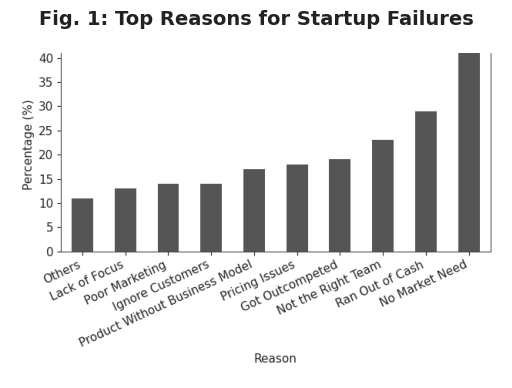
Top reasons for startup failures by percentage. Lack of market need and running out of cash are the leading causes of startup demise
1. Spending Money Without a Plan (Overspending)
“Don’t treat funding like revenue.” One of the biggest mistakes newly funded startups make is ramping up spending as if the money will never run out. It’s easy to justify fancy offices, top-of-the-line equipment, or lavish marketing campaigns now that you have capital in the bank. But overspending without a clear plan can rapidly inflate your burn rate and shorten your runway. Remember, cash in the bank is not the same as profit.
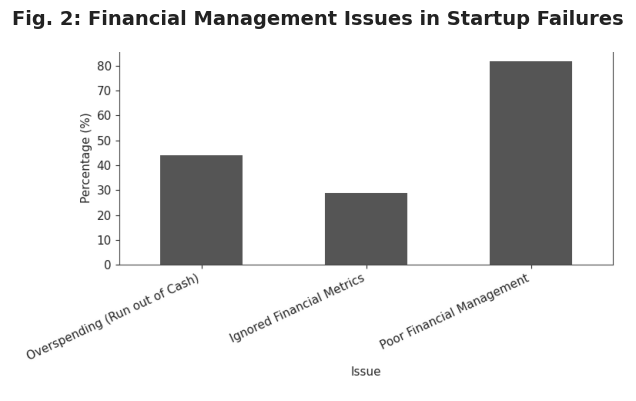
Startups that burn through funds without discipline often face dire consequences. Roughly 44% of startup failures cite running out of cash as a primary cause. For example, Jawbone, a once high-flying wearable tech startup, raised over $900 million in funding but infamously burned through it with aggressive spending. The company “burned through more than $500 million in equity” but never achieved a sustainable market share, ultimately liquidating as one of the largest VC-backed failures. Jawbone’s story underscores that a flood of cash can sustain bad habits and mask underlying issues.
How to avoid: Create a detailed financial plan and budget for your new funds before you start spending. Allocate resources to the highest-priority initiatives that drive growth or revenue. Establish spending guidelines and approval processes to prevent impulse expenditures. It’s wise to maintain a cash buffer and plan your burn rate to sustain at least 12-18 months of runway with the funding you have. Treat every dollar as an investment in reaching the next milestone, not as free income. By staying lean and tracking every expense, you extend your runway and buy time to achieve product-market fit or profitability before your funds run out.
2. Hiring and Scaling Too Quickly (Premature Scaling)
A fresh infusion of capital often comes with pressure to grow fast. Hiring new talent, expanding into multiple markets, and blitz-scaling your operations might seem like the right move now that you can afford it. But expanding too quickly, too early – also known as premature scaling – is a leading startup killer. One landmark study found that 70% of startups scaled prematurely along some dimension and that 74% of high-growth internet startups failed due to premature scaling. In fact, startups that scale properly grow 20 times faster than those that scale too soon, highlighting how damaging reckless expansion can be.
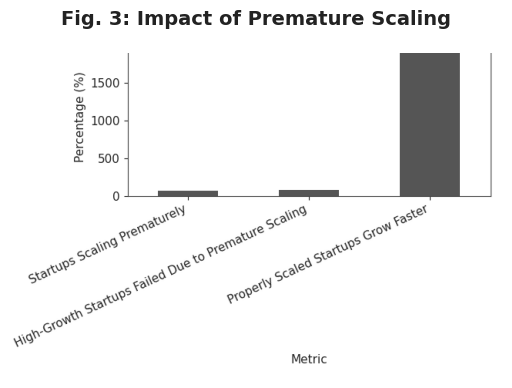
Premature scaling often manifests as over-hiring and building a team far larger than your current needs. Data shows that the team size of startups that scale prematurely is 3× bigger than that of consistent (sustainably growing) startups at the same stage. This bloat drives up burn rate without proportional gains in progress. Another red flag is aggressive market or product expansion before achieving a stable base. Founders sometimes feel pressure from big investors to “shoot for the moon” after funding, pouring money into scaling sales, launching new product lines, or entering new markets before they’ve nailed product-market fit or unit economics. The result is often wasted resources and operational chaos.
Lesson learned: bigger isn’t better unless the fundamentals are sound. A well-known case is Zenefits, an HR software startup that expanded rapidly on the back of ample VC funding. Zenefits hired quickly and entered hyper-growth, only to run into major regulatory and operational issues that forced layoffs and a retrenchment of its business. The company’s struggles illustrated how scaling without solid foundations (like compliance, processes, and proven demand) can backfire spectacularly.
How to avoid: Grow deliberately, not recklessly. Even with money in the bank, ensure your core product and market fit are validated before massively increasing headcount or spending big on customer acquisition. Set clear growth milestones and KPIs (e.g., user numbers, revenue targets) that must be met to justify each scaling step. Hire for roles that fill critical skill gaps and support these milestones, not just because you can. As one analysis noted, premature hiring sprees and bloated teams are pitfalls to avoid. It’s better to be slightly understaffed and efficient than overstaffed and burning cash. In short, use your funding to scale what’s working, not to paper over what isn’t.
3. Ignoring Financial Metrics and Discipline
When cash is plentiful, it’s tempting to take your eye off the metrics that matter. Many funded startups get caught up in the excitement of growth and neglect sound financial management. This is a deadly mistake. Even if you have a healthy bank balance now, you need strong controls and visibility into how that money is used. As veteran investors often say, “cash can hide a lot of sins.” If you’re not rigorously tracking your finances, those sins can multiply until it’s too late.
A lack of financial discipline can take many forms: not monitoring your burn rate closely, failing to update your financial projections, or ignoring unit economics like Customer Acquisition Cost (CAC) and Lifetime Value (LTV). Shockingly, 82% of businesses that failed in 2023 attributed it to poor financial management. Startups that don’t measure and control their burn are playing with fire – 29% of startups fail because they simply run out of money before becoming sustainable. Often, this happens because founders focus on what they can do with their new funds, rather than whether those expenditures are bringing them closer to profitability or the next funding milestone.
One high-profile example was LeEco, a Chinese tech company that ventured into everything from TVs to smartphones to electric cars. Flush with investor cash, LeEco ignored key financial metrics and kept spending aggressively across business lines without a clear path to recouping those investments. The result was a severe cash crunch that led to debt and restructuring. Closer to home, many startups have learned the hard way that “growth at all costs” backfires if costs aren’t monitored – you might recall startups that raised big rounds only to later scramble with layoffs and emergency budgeting when they realized their burn rate was unsustainable.
How to avoid: Build a culture of financial accountability. Right after funding, establish or update your key financial metrics dashboard – track burn rate, runway (months of cash left), CAC, LTV, gross margins, and any metrics critical to your business model. Review them every week or month with your leadership team. Set targets or guardrails (e.g., burn no more than $X per month or maintain at least 12 months of runway at all times) and take corrective action early if metrics stray. Remember the advice from seasoned founder Larry Augustin: “Plan based on the funding you have, not the next round that may never come,”. In practice, this means budgeting your current funds to hit key milestones so that if you do raise another round, it’s from a position of strength, and if you don’t, you can still survive. By instilling strong financial discipline and regularly comparing expenditures against results, you’ll catch problems early and ensure your newfound capital is fueling productive growth, not vanity projects.
4. Losing Focus on the Core Mission
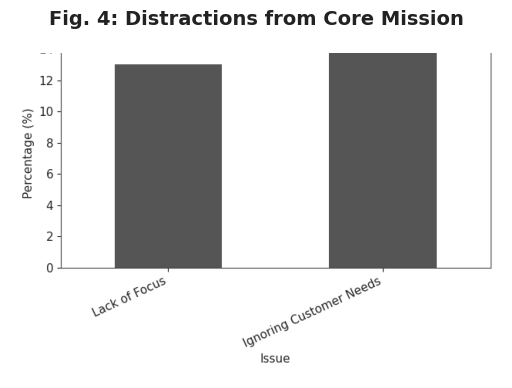
With a sudden cash influx, founders often feel empowered to chase every opportunity at once. It becomes easy to say “yes” to new product ideas, target new customer segments, or invest in side projects. Losing focus – drifting away from your core mission and what made your startup fundable in the first place – is a serious pitfall after funding. Startups can fall victim to “shiny object syndrome,” assuming more money means you can do everything. In reality, spreading yourself too thin can undermine your main business and confuse your team and customers. Notably, 13% of startup failures are attributed to a lack of focus, and 14% fail due to ignoring customer needs/feedback. Both issues that often arise when leadership is distracted by non-core initiatives.
Consider the cautionary tale of Quibi, the short-form video streaming startup. Backed by nearly $2 billion in funding, Quibi had the resources to pursue big ideas. However, it poured money into star-studded content and marketing blitzes without truly validating that customers wanted its product. In essence, Quibi tried to do “too much, too fast” in a crowded market, rather than nailing a specific niche. It underestimated the importance of product-market fit and paid the price, shutting down just six months after launch. This example illustrates that even enormous funding can’t compensate for a fuzzy value proposition or a lack of focus on what users want.
Another example is startups that pivot repeatedly post-funding. With more cash, the temptation grows to pursue multiple pivots or add features upon features (feature creep) in hopes that something sticks. But a funded startup is not the time to abandon discipline in product strategy. Investors backed your vision; if you now try to do five different things, you risk doing none of them well. As the data shows, the number one startup killer is still “No Market Need,” cited by 42% of failed startups. All the funding in the world won’t help if you lose sight of solving a real problem for your target market.
How to avoid: Refine your vision and stick to it. After funding, take the opportunity to reiterate your core mission to your team. Identify the one or two things your startup must nail in the next 12-18 months (for example, a specific product launch or user growth in your primary market). Channel the bulk of your new resources toward those goals before expanding scope. It’s wise to maintain a product roadmap with clear priorities, and when new ideas surface (and they will), evaluate them against your strategic focus. Will that shiny new feature or project meaningfully accelerate customer acquisition or revenue for your core offering? If not, park it for later. As a founder, you also need to keep listening to customers even after you have money in the bank. Make sure you’re still solving their pain points and improving your core product. Staying focused and customer-centric will help ensure your startup’s growth is built on real, durable value, not just the excitement of what money could let you do.
5. Assuming the Next Funding Will Come Easily (Neglecting Sustainability)
When a startup raises a significant round, there can be an implicit assumption that “if we need more money later, we can always raise again.” Counting on future investors to rescue you is a dangerous mindset. Market conditions can change, or your startup’s metrics might not pan out as hoped, leaving you in a lurch. Over-reliance on continuous funding is a pitfall that has sunk many ventures. In practice, this looks like failing to work toward sustainability (revenue or profitability) with the current funds, and instead planning your spending on the belief that a bigger Series B or C will fill any gaps. However, the reality is that many startups never make it to that next round. About 60% of startups that secure a pre-seed/seed round fail to reach Series A. Even after a Series A, 35% fail before they can get to Series B. The funding environment can be unforgiving – you don’t want to be caught needing a lifeline that isn’t there.
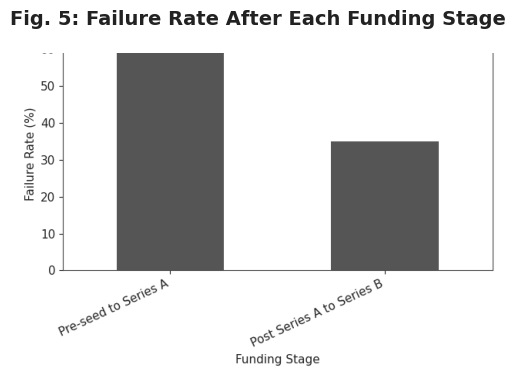
We saw this dynamic during market downturns when VC money dried up: startups with high burn and no fallback plan were forced into drastic cuts or shut down when their anticipated next round never materialized. A famous quote from experienced founder and investor Larry Augustin encapsulates this lesson: “People get into trouble because they plan for what they’ll do with the next funding round rather than plan based on the funding they already have. That next funding round may not happen.” In essence, hope is not a strategy. Betting your company’s survival on the assumption of future capital is akin to a gambler’s fallacy in business.
How to avoid: Have a path to self-sustainability (or at least milestone progress) with current funds. This doesn’t mean you must become profitable before the money runs out (many startups won’t), but you should at least reach a value inflection point – e.g., a certain user base, revenue level, or product development milestone that would make you an attractive investment or even allow breakeven operation if needed. Develop a contingency plan for a no-new-funding scenario: “If we cannot raise our next round by X date, what steps will we take to extend runway or become cash-flow neutral?” This could involve controlled spending cuts (far easier if you planned them rather than in panic), or accelerating revenue-generating initiatives. By treating additional funding as uncertain, you’ll make more prudent decisions with the funds you have. Interestingly, once you do this, you often become more attractive to investors because you’re building a business that can stand on its own. In summary, use your funding to buy growth and time, not dependency. The best-funded startups leverage their cash to reach escape velocity, not just to coast until they hopefully raise again.
Conclusion: Steering Your Startup Toward Sustainable Growth
Securing funding is a huge accomplishment – but it’s not the finish line, it’s the beginning of a more complex race. Avoiding these five pitfalls will help ensure that your startup uses its new capital as a springboard to success rather than a recipe for failure. By spending wisely, scaling carefully, maintaining financial rigor, staying focused on your mission, and planning for sustainability, you can beat the odds that plague so many funded startups. Remember, the same principles that got you funded – clear vision, efficiency, and proof of value – are the ones that will carry you forward in the post-funding stage.
Finally, you don’t have to navigate this journey alone. At Van Natter Consulting Group, we specialize in guiding funded startups through these critical growth phases. From financial planning and cash flow management to strategic scaling and operational coaching, our team has the experience to help you capitalize on your funding while avoiding costly missteps. Don’t let newfound cash become a liability – with the right approach and partners, it can fuel lasting success.
Let Van Natter Consulting Group help you turn your fresh capital into real growth and sustainable momentum for your startup.
 Book a Free Strategy Call with Van Natter Consulting Group